Most Indian skincare advice passed down as common sense does not hold up: toothpaste does not treat pimples, lemon juice does not lighten skin safely, and daily multani mitti makes oily skin oilier, not clearer. The habits below are widely repeated, and most of them either do nothing or actively set your skin back.
None of this means traditional ingredients are useless. Multani mitti, neem, turmeric, and rose water all earn their place. The problem is the folklore that grew around them, which turned reasonable ingredients into unreasonable expectations and, in several cases, genuinely harmful methods. Here are twelve of the most common ones, what the reality is, and what to do instead.
Myth 1: Does Toothpaste Remove Pimples?
No. This is probably the most widespread bad skincare tip in India, and it has survived because it appears to work for a few hours.
Toothpaste contains menthol, baking soda, hydrogen peroxide, and alcohol. Those ingredients dry out the surface of a spot, so the pimple looks flatter the next morning. What they do not do is address the two things actually causing it: a clogged pore and the bacteria multiplying inside it. Meanwhile, the same ingredients disrupt the skin barrier around the spot.
The usual result is a pimple that flattens slightly, surrounded by a patch of red, peeling, irritated skin that then leaves a dark mark. That mark can take weeks to fade — considerably longer than the pimple would have taken on its own.
What to do instead: leave the spot alone, keep the area clean, and use a proper spot treatment if you want to speed things along. If breakouts are frequent rather than occasional, a weekly neem face pack for acne addresses the oil and bacteria side of the problem far more sensibly than anything from your bathroom shelf.
Myth 2: Does Lemon Juice Lighten Skin?
Not usefully, and the risk is real. Lemon juice has a pH of around 2, which is far more acidic than skin's natural pH of roughly 4.7 to 5.7. Applied neat, it strips the acid mantle and leaves the barrier compromised.
The bigger problem is phytophotodermatitis. Citrus contains compounds called furocoumarins that react with sunlight, and the reaction produces a chemical burn followed by dark patches that can last months. This happens often enough in India, where lemon face packs meet strong sun, that dermatologists see it regularly.
Whatever brightening people notice comes from lemon's mild exfoliating effect on dead surface cells. That effect is available from gentler ingredients with none of the burn risk. Orange peel powder delivers vitamin C and mild exfoliation in a form that does not sit on the skin at pH 2, and the standard tan removal approaches that actually work rely on gradual, repeated mildness rather than one aggressive session.
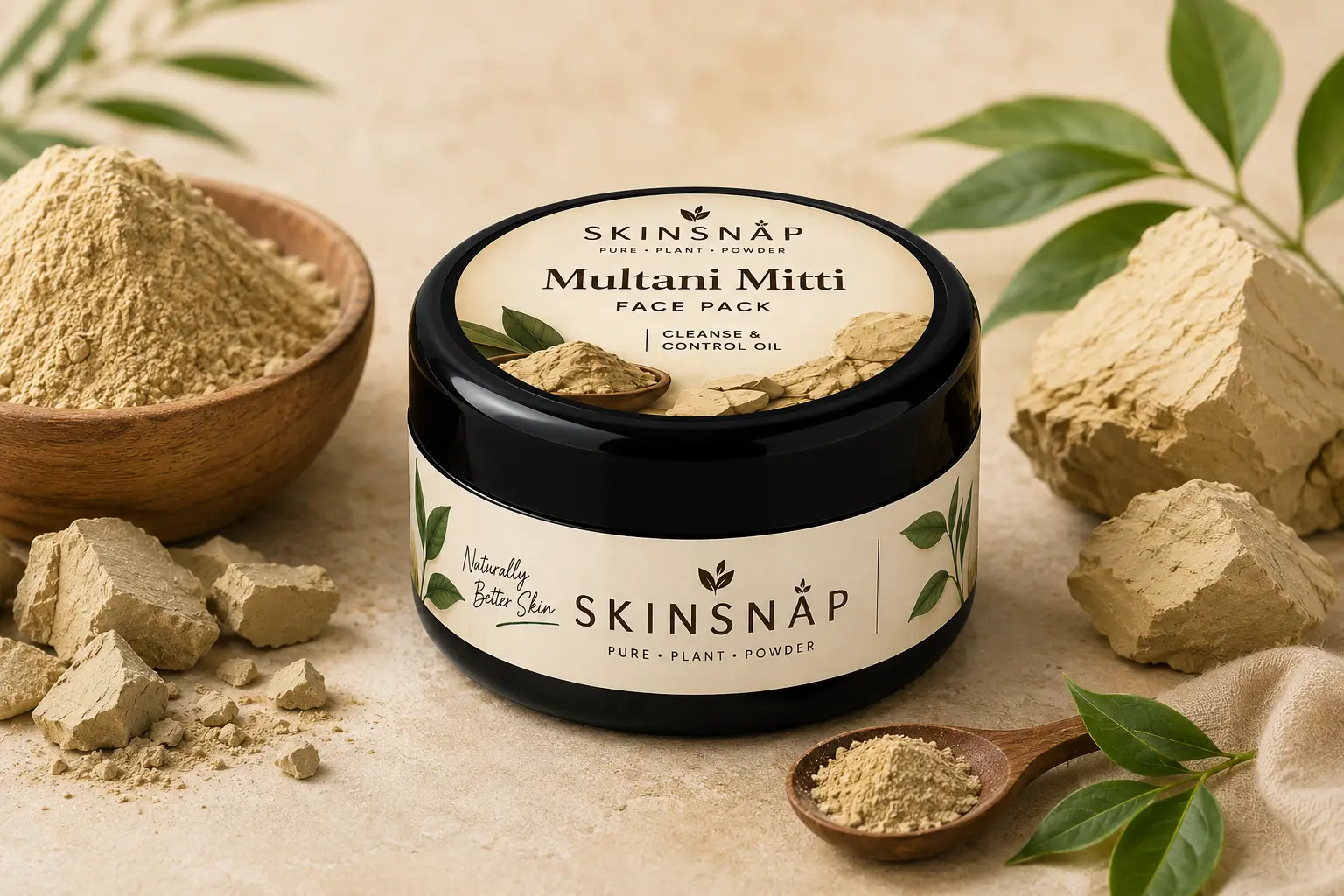
Myth 3: Can I Use Multani Mitti Every Day?
No, and this one deserves particular attention because it is so often framed as a positive. The logic goes: multani mitti absorbs oil, my skin is oily, therefore more is better.
Multani mitti works by adsorbing sebum from the skin surface. Used once or twice a week, it keeps oil at a comfortable level. Used daily, it strips more oil than the skin can spare. The barrier weakens, water escapes faster, and the oil glands read the dryness as a signal to produce more sebum. Within three to four weeks, many daily users find their skin oilier than when they started, often with new patches of flakiness alongside the shine.
The right frequency by skin type looks roughly like this:
- Oily skin: twice a week, full face.
- Combination skin: once or twice a week, or clay on the T-zone only if the cheeks feel tight afterwards.
- Dry skin: once a week at most, and rinse early.
- Sensitive skin: once every ten days or so, with a patch test first.
The full frequency logic and the mistakes that go with it is worth reading if you have been treating packs as a daily step. If your skin is genuinely split between an oily nose and dry cheeks, the combination skin approach matters more than raw frequency.
Myth 4: Do Pores Open and Close?
They do not. Pores are openings, not valves — there is no muscle around them to contract or relax. The steam-then-cold-water ritual, repeated in almost every home facial guide, does something real, just not what it claims.
Warm water and steam soften the sebum plug sitting inside a pore, which makes it easier to clean out. Cold water constricts the small blood vessels near the surface, which reduces slight swelling and makes pores look temporarily smaller. Both effects are useful. Neither is the pore opening or shutting.
Practically, steam does not need to be aggressive to help, and a cold rinse "seals" nothing. Pore size is largely genetic. Keeping pores clear stops them looking stretched, which is the part you can change.
Myth 5: Is Natural Always Safer?
Natural describes where an ingredient came from, not how the skin will react to it. Some of the most reliably irritating things people put on their faces are entirely natural: undiluted lemon, raw garlic, baking soda, neat tea tree oil, and coarse sugar scrubs.
The advantage of a formulated product is not that it contains synthetic ingredients. It is that someone controlled the concentration, adjusted the pH, and tested whether the combination sits well on skin. A kitchen remedy has none of those controls, which is why the same recipe can work fine for one person and cause a reaction in another.
This applies to traditional ingredients too. Turmeric is genuinely anti-inflammatory, but raw kitchen haldi in a heavy layer stains skin yellow for days and can irritate at high quantities. The ingredient is fine; the dose and the format are what go wrong.
Natural ingredients worth respecting, not fearing:
- Multani mitti — effective, but drying if overused or left until it cracks.
- Neem — antibacterial, and strong enough that most skin does not want it more than twice weekly.
- Sandalwood — genuinely soothing and cooling, one of the gentler options.
- Rose water — mild enough for daily use, which is why it works so well as a mixing base rather than plain water.
- Aloe vera — hydrating and low-risk, though fresh leaf gel needs the yellow latex rinsed off first.
Myth 6: Does Oily Skin Need Moisturiser?
Yes, and skipping it is one of the most counterproductive habits in Indian skincare, particularly in humid months when skin already feels greasy.
Oil and water are separate things in skin. You can have plenty of sebum on the surface and still be dehydrated underneath, which is exactly what happens when someone with oily skin uses a strong foaming cleanser, an alcohol toner, a clay pack, and no moisturiser. The skin responds to water loss by producing more oil. The routine designed to reduce shine produces more of it.
The fix is a lightweight gel moisturiser, not a heavy cream and not nothing. This is a large part of why the monsoon routine for oily and acne-prone skin leans towards lighter textures rather than removing steps altogether.
Myth 7: Do Face Packs Shrink Pores Permanently?
No. The tightening feeling as a clay pack dries is the clay contracting on the skin surface, not your pores resizing. Once you rinse, that effect goes.
There is a real benefit hiding behind the myth. A pore that is packed with oxidised sebum looks larger than the same pore emptied out. Clearing that debris genuinely makes pores less visible, and doing it consistently keeps them that way. What does not happen is a structural change. Nobody's pore diameter is smaller after a face pack than it was before.
Charcoal is the more thorough option if congestion on the nose is your main complaint, and it pairs well with the understanding that this is maintenance rather than a one-time fix.
Myth 8: Is Sunscreen Necessary Indoors and in Monsoon?
For most people, yes. Two ideas cause the confusion here: that sunscreen is for beach days, and that cloud cover means no UV.
UVB, which causes burning, drops significantly on cloudy days and does not pass through window glass. UVA does neither of those things. It penetrates cloud, passes through glass, and is the wavelength most responsible for tanning, pigmentation, and photoageing. A monsoon afternoon in Mumbai or a desk beside a window in Bengaluru still delivers meaningful UVA exposure.
This matters for anyone using brightening products, because sun exposure undoes brightening faster than most packs can build it. If you are working on tan or uneven tone, sunscreen is the part that makes the rest worth doing. Skip it and you are refilling a bucket with a hole in it.
Myth 9: Does Scrubbing Harder Get Skin Cleaner?
No. Daily scrubbing with a coarse physical exfoliant creates micro-tears in the skin surface. Those trigger inflammation, and inflamed skin is more prone to breakouts, redness, and post-inflammatory marks.
The instinct is understandable: skin feels smooth right after scrubbing. What actually happens is that the barrier degrades over several weeks while the after-feel stays the same, so the damage is invisible until it is fairly advanced.
Signs you are over-exfoliating:
- Skin stings when you apply anything, even water.
- A tight, shiny, slightly waxy look rather than a healthy glow.
- New sensitivity to products you used comfortably for months.
- More breakouts despite a more aggressive routine.
- Redness that does not settle within an hour of washing.
Once or twice a week is enough for almost everyone. On active acne, skip physical scrubbing entirely — dragging grit across inflamed spots spreads bacteria and rarely helps. Coffee grounds are a reasonable mild exfoliant when used gently and infrequently, but the same rule applies.
Myth 10: Will a Face Pack Fix My Acne?
Sometimes it helps. It will not fix moderate or severe acne on its own, and expecting it to leads people to keep trying stronger packs while the actual cause goes untreated.
Acne is driven by a combination of excess sebum, follicular blockage, bacterial overgrowth, and inflammation, with hormones sitting behind most of it. A weekly clay or neem pack addresses the first two reasonably well and the third partially. It has essentially no effect on hormonal drivers.
A useful rule of thumb:
- Occasional spots, mostly around the T-zone — a weekly clay or neem pack plus a consistent daily routine usually manages this.
- Regular breakouts, mild but persistent — packs support, but you need an actual active such as salicylic acid or benzoyl peroxide.
- Painful cystic spots, jawline breakouts, scarring — see a dermatologist. No face pack will resolve this, and delaying treatment increases the scarring.
Treating a pack as a supporting player rather than a cure keeps expectations sane and stops you from escalating to increasingly harsh home remedies out of frustration.
Myth 11: Does Drinking More Water Give You Glowing Skin?
Only if you were dehydrated to begin with. Once you are adequately hydrated, drinking more water does not increase skin water content in any measurable way — the body regulates that tightly, and excess simply leaves as urine.
Skin hydration is controlled largely by the barrier, meaning how well your skin holds onto the water it already has. That is influenced by ceramides, humectants, climate, and whether you have been stripping the barrier with harsh cleansers. A decent moisturiser does more for how hydrated your skin looks than any change in water intake.
The layered hydration logic behind the Korean glass-skin routine is built on exactly this principle: glow comes from water held in the skin, and it gets there topically.
Myth 12: Do Expensive Products Work Better?
Not reliably. Price correlates with packaging, marketing spend, and brand positioning at least as much as with formulation quality. A well-made product at ₹300 can outperform a poorly formulated one at ₹3,000.
What matters, in rough order:
- Does it contain an active with evidence behind it?
- Is the concentration high enough to matter and low enough to tolerate?
- Is the pH right for that active to work?
- Will you actually use it consistently?
That fourth point defeats more expensive products than the first three combined. A serum rationed to twice a week does less than a cheaper one used daily.
What About Freshness — Homemade vs Store-Bought?
This one sits between myth and half-truth. Homemade is often assumed to mean fresher by definition. It does not.
A tub of multani mitti opened four months ago and kept on a humid bathroom shelf is not fresh in any meaningful sense. Clay is hygroscopic — it pulls moisture from the air, hardens into lumps, and loses the loose texture that made it easy to work with. The storage and shelf-life details matter more than most people expect, especially for anyone taking six months to finish a tub.
The honest comparison between DIY and ready-made packs goes further into the trade-offs. The short version: homemade wins on ingredient control, loses on consistency and storage. Ready-made wins on convenience, loses when the format requires preservatives and stabilisers to sit in a jar for two years.
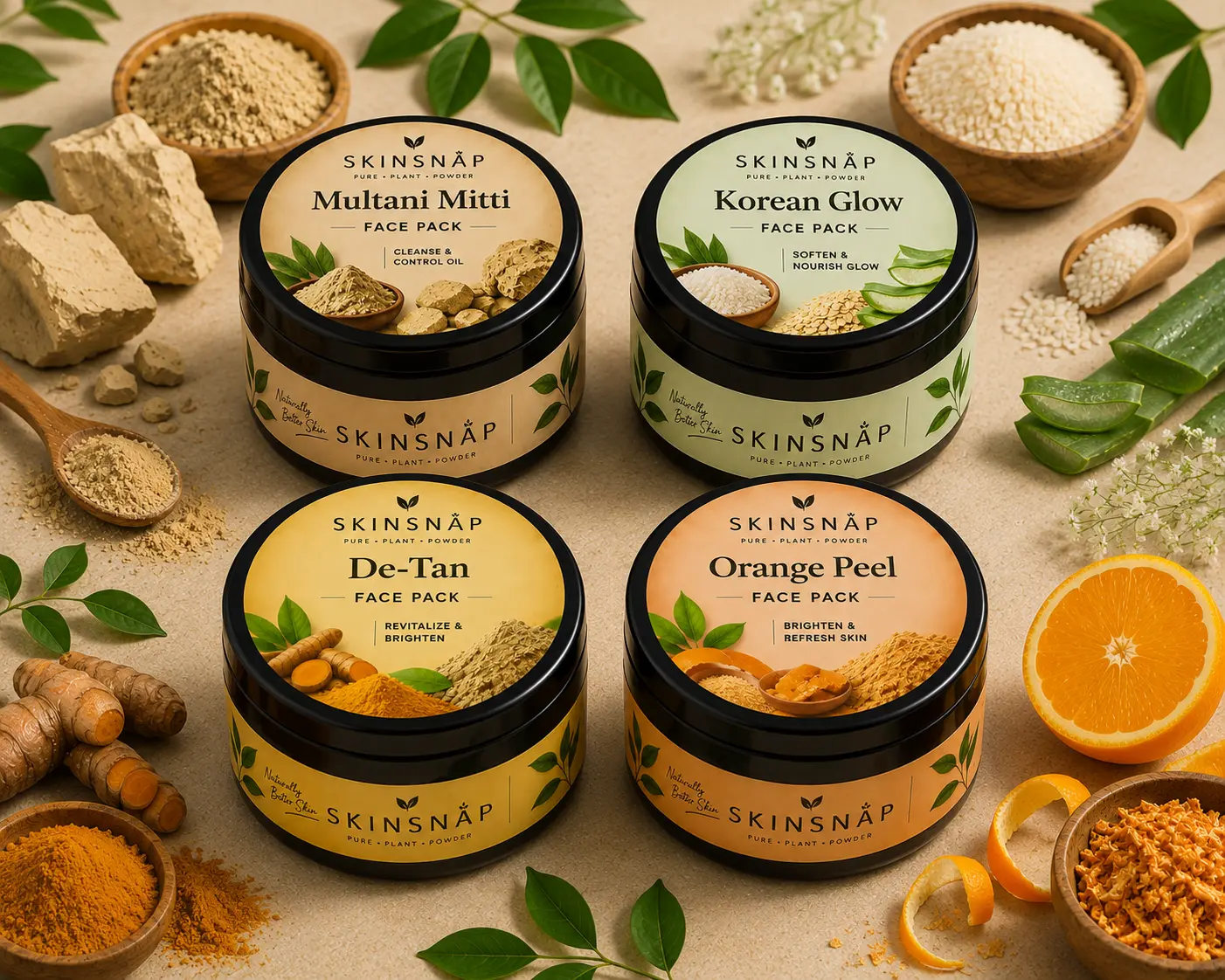
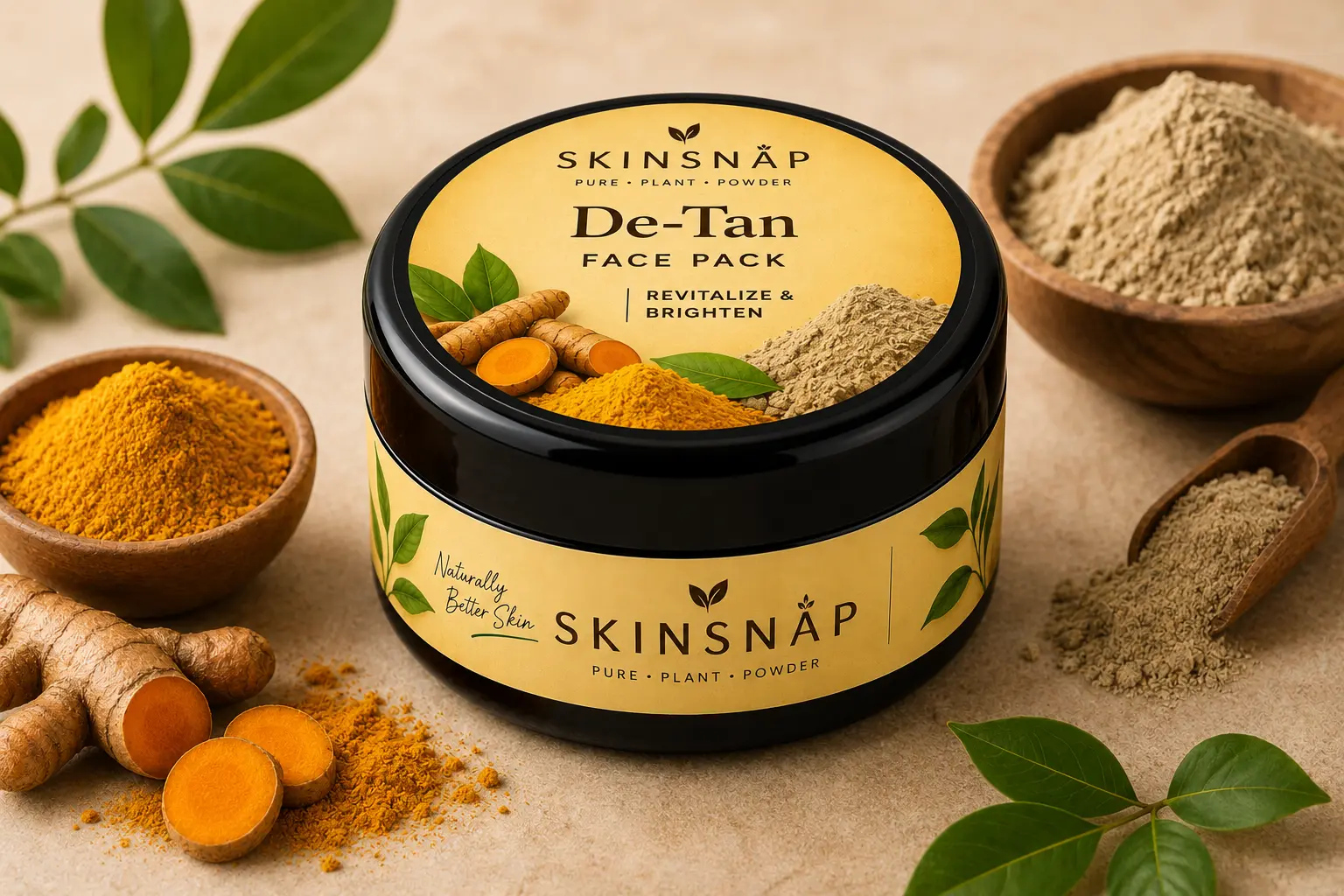
Single-use sachets are one way around both problems. SkinSnap's dual-chamber pouch keeps the clay powder and pure rose water in separate compartments and mixes them only when you press the pouch, so each session starts with clay at full strength and paste at the right consistency. The SkinSnap multani mitti pack exists largely because the hardened-tub problem is so common among once-a-week users.
Which Myths Cause the Most Damage by Skin Type?
The same myth does not cost everyone the same amount. Where you should focus depends on your skin.
Oily and acne-prone skin
The expensive mistakes are skipping moisturiser, over-cleansing, and using clay daily. All three follow from the same instinct — remove more oil — and all three make oiliness worse over time. Toothpaste on spots belongs here too, since this group encounters spots most often.
Dry skin
Over-exfoliation and long clay sessions do the most damage. Dry skin has less margin before the barrier gives out, so a scrub that mildly irritates oily skin can leave dry skin flaking for a week. If you use clay at all, rinse it while still damp rather than waiting for it to crack.
Combination skin
The costly assumption is that one product should work across the whole face. It usually will not. Treating the T-zone and cheeks as separate areas solves more than any single "balancing" product.
Sensitive skin
Natural equals safe is the dangerous one here. Undiluted lemon, raw garlic, strong essential oils, and neat neem paste all cause reactions more readily on sensitive skin. Patch test on the inner forearm for 24 hours before anything new goes on your face, without exception.
Mature skin
Sunscreen scepticism costs the most. Photoageing accounts for a large share of visible ageing, and it is cumulative — the UVA that reached your skin through a window at 30 is still counted at 50. There is no product that reverses it as effectively as sunscreen prevents it.
Mistakes That Come From Believing These Myths
- Layering three actives at once because each one was recommended separately. This irritates skin faster than any single one would.
- Judging a product in three days. Cell turnover takes roughly four weeks. Almost nothing shows its real effect faster than that.
- Switching products the moment skin looks worse. Some purging is normal with exfoliating actives; constant switching means you never learn what works.
- Applying a pack to dirty skin. A pack cannot pull anything through a layer of sunscreen and sebum. Cleanse first.
- Leaving a pack on until it cracks. The tight, cracking stage is the part that damages the barrier. Rinse while still slightly damp.
- Treating the neck as optional. Tan, pigmentation, and ageing all show there, often more visibly than on the face. Anyone who has planned a pre-bridal routine learns this the hard way.
- Using hot water to rinse. It strips more oil than warm water and increases redness, without cleaning any better.
How to Tell Good Skincare Advice From Bad
A few filters catch most of the nonsense before it reaches your face.
- Check whether the mechanism makes sense. If a claim requires pores to have muscles or melanin to be washable, it is wrong regardless of who said it.
- Be suspicious of instant results. Skin takes about four weeks to turn over. Anything promising a visible change overnight is describing swelling, temporary tightening, or a stain.
- Ask what happens with repeated use. Many bad remedies work once and cause damage over months. Toothpaste and lemon both fall into this category.
- Watch for absolute claims. "Never use oil on oily skin" and "always double cleanse" both ignore that skin varies.
- Separate the ingredient from the method. Turmeric is not the problem; a thick layer of raw kitchen haldi left on for an hour is.
- Notice who benefits. Advice attached to a product that only that product can satisfy deserves more scrutiny than advice that costs nothing.
None of this requires you to abandon traditional ingredients. Multani mitti, neem, rose water, and sandalwood have been in Indian skincare for a long time for reasonable reasons. Using them at sensible frequencies, in sensible quantities, with sunscreen and a moisturiser doing the daily work, gets far better results than any of the twelve myths above ever did.
If you want a straightforward starting point, the 4-in-1 combo pack covers oil control, brightening, tan, and glow in single-use sachets — which at least removes the guesswork around quantities, mixing ratios, and whether the powder in the tub is still worth using.
Frequently asked questions
No. Toothpaste dries the surface of a spot because of menthol, baking soda, and alcohol, but it does nothing about the bacteria or clogged pore underneath. It commonly causes irritation, peeling, and dark marks that outlast the pimple itself. Spot treatment made for skin works far better.
Not in the way people hope. Lemon juice is highly acidic and can strip the skin barrier, and applied before sun exposure it can cause phytophotodermatitis, a burn that leaves dark patches. Any brightening comes from mild exfoliation, which gentler ingredients deliver without the burn risk.
No. Once or twice a week is the sensible range for most skin types. Multani mitti absorbs oil, and daily use strips the barrier until the skin overproduces sebum to compensate. Daily clay tends to make oily skin oilier over a few weeks, not clearer.
Pores have no muscles, so they cannot open or close. Warm water softens the oil plug inside them, which makes cleansing easier, and cold water constricts surrounding blood vessels so pores look temporarily smaller. Neither changes pore size in any lasting way.
No. Natural describes origin, not safety. Undiluted lemon, raw garlic, baking soda, and neat essential oils are all natural and all commonly cause irritation or burns. Well-formulated products are pH-balanced and dose-controlled, which is often what makes them gentler than a kitchen remedy.
Yes. Skipping moisturiser dehydrates the skin, and dehydrated skin often signals oil glands to produce more sebum. That is why aggressive drying routines usually leave people oilier within a few weeks. A lightweight gel moisturiser is the fix, not a richer cream or no cream at all.
No. A clay pack makes pores look smaller by clearing the debris that stretches them and by tightening the skin surface as it dries. Both effects fade within hours. Consistent cleansing and oil control keep pores looking refined, but pore size itself is largely genetic.
Yes, in most cases. UVA passes through window glass and through cloud cover, and UVA is the wavelength most involved in tanning and long-term ageing. Cloudy monsoon days still carry meaningful UV. Daily sunscreen matters more than any brightening product for preventing tan and pigmentation.
No. Daily physical scrubbing creates micro-tears and inflames the barrier, which often triggers more breakouts and redness. Once or twice a week is plenty for most skin. On active acne, scrubbing spreads bacteria and worsens the inflammation you are trying to treat.
Rarely. A clay or neem pack helps with surface oil and mild congestion, which supports clearer skin, but moderate to severe acne is driven by hormones, inflammation, and bacteria that a weekly pack cannot address. Persistent acne needs a dermatologist, not a stronger pack.
Only if you were genuinely dehydrated. Beyond normal hydration, extra water does not treat acne, dullness, or dryness. Skin water content is regulated by the barrier, so a good moisturiser affects how hydrated your skin looks far more than an extra litre of water.
Not reliably. Price reflects packaging, marketing, and brand more than formulation quality. What matters is the active ingredient, its concentration, the pH, and whether you use it consistently. A cheap, well-formulated product used regularly beats a premium one used occasionally.
No. Squeezing pushes some of the contents deeper into the skin, spreads bacteria, and increases the chance of a lasting scar or dark mark. A pimple left alone usually clears in three to seven days. A popped one often takes longer and leaves a mark.
Not automatically. A tub of clay powder opened months ago and stored in a humid bathroom is not fresh, and homemade pastes have no preservative system if you keep leftovers. Freshness depends on how the ingredients are stored and how quickly they are used.
No. A face pack is an occasional extra, not a substitute for cleansing, moisturising, and sunscreen. Most visible improvement comes from what you do every day. Weekly packs add oil control, brightening, or soothing on top of that base, and work best in that role.
Try it the fresh way
This article is for general skincare information, not medical advice. Always patch-test a new product on your inner arm and wait 24 hours before applying it to your face.