A neem face pack helps with acne mainly because neem contains natural antibacterial and anti-inflammatory compounds that target the bacteria and inflammation behind breakouts, while also helping control the excess oil that clogs pores in the first place. Used two to three times a week as a freshly mixed paste, it can mean fewer new pimples and calmer skin within a few weeks — though it won't clear stubborn or cystic acne on its own.
Neem, or the Indian lilac tree, has been part of Indian households for far longer than modern acne treatments have existed. Grandmothers ground fresh neem leaves into paste long before "antibacterial skincare" became a marketing phrase. The tree earned that reputation the hard way, through generations of actual use on actual skin. This guide covers what neem really does for acne-prone and oily skin, how to use it without overdoing it, and where its limits are.
What Does Neem Do for Acne-Prone Skin?
Neem leaves and powder contain compounds like nimbin, nimbolide, and azadirachtin, which give the plant its well-known antibacterial, antifungal, and anti-inflammatory properties. For acne, these three effects work together rather than separately.
Fighting acne-causing bacteria
Acne often starts when oil and dead skin cells clog a pore, creating the perfect environment for bacteria to multiply and trigger inflammation. Neem's natural antibacterial compounds can reduce this bacterial load on the skin's surface, which is part of why it has stayed relevant across centuries of Ayurvedic skincare.
Calming redness and inflammation
Active breakouts are usually red, swollen, and tender because of the inflammatory response happening underneath the skin. Neem's anti-inflammatory properties can take the edge off this reaction, so pimples feel less angry and calm down faster.
Controlling excess oil
Oily skin produces more sebum than it needs, and that extra oil is a major contributor to clogged pores. Neem has a mild astringent quality that helps tighten pores and reduce surface oil, similar in spirit to how multani mitti controls oil for oily and combination skin.
Supporting skin cell turnover
As skin cells renew themselves faster, dead cell buildup that clogs pores gets cleared more efficiently, and shallow marks left behind by old breakouts can fade a little quicker. This effect is gradual and works best alongside consistent use, not as a quick fix.
How Do You Use a Neem Face Pack the Right Way?
Neem is forgiving as ingredients go, but a few basics make the difference between calm skin and irritated skin.
Step 1: Cleanse your face first
Start with a clean, dry face. Applying any face pack over makeup, sunscreen, or built-up oil just traps that layer underneath instead of letting the neem work directly on your skin.
Step 2: Mix a fresh, smooth paste
Combine about two spoons of neem powder with rose water until you get a paste similar in thickness to plain yogurt. Rose water is the gentler choice here since plain water alone can feel drying, and we explain the reasoning in our guide on rose water for face.
Step 3: Apply an even, medium layer
Spread the paste evenly over your face, keeping it away from the eyes, eyebrows, and lips. A very thin layer dries too quickly to do much good, while a thick layer takes forever and increases the chance of over-drying your skin.
Step 4: Rinse before it fully cracks
Wash it off with lukewarm water once the pack is semi-dry, usually around 10 to 15 minutes in. Letting it dry and crack completely pulls extra moisture from your skin, which is one of the most common reasons people find neem "too drying."
Step 5: Moisturise right after
Follow up with a light, non-comedogenic moisturiser. Neem's oil-control action means your skin needs some hydration back, especially if you already have dry patches or use the pack more than twice a week.
How Often Should You Use Neem for Acne?
Two to three times a week is the sweet spot for most oily and acne-prone skin. Daily use sounds like it should work faster, but it usually backfires — over-stripping the skin's natural oil barrier can trigger even more oil production to compensate, along with dryness and irritation. If you're new to neem, start with once a week, watch how your skin reacts over a few days, and build up gradually from there. This mirrors the same logic we cover in how often you should use a face pack for other clay and herbal packs.
Mistakes to Avoid With Neem Face Packs
A few habits quietly cancel out the benefits of this ingredient.
- Using it every single day. This strips natural oils faster than skin can replace them, often leading to more irritation and rebound oiliness rather than clearer skin.
- Leaving the paste on until it fully dries and cracks. This pulls out more moisture than necessary and can leave skin feeling tight and irritated for hours afterward.
- Skipping the patch test. Neem is generally gentle, but any natural ingredient can trigger sensitivity in some people, so testing on your inner arm first avoids surprises on your face.
- Expecting overnight results on deep or cystic acne. Neem helps with surface-level bacteria, oil, and mild inflammation. Painful, deep breakouts usually need a dermatologist's input alongside any home routine.
- Storing mixed paste for the next day. Once neem powder meets liquid, it starts losing freshness within hours and can pick up bacteria, which defeats the point of using an antibacterial ingredient.
- Combining it with harsh actives on the same day. Layering neem with strong exfoliants or acids on the same day raises the risk of irritation. Space them out instead.
Neem vs Other Natural Acne-Fighting Ingredients
Neem is effective, but it's not the only natural option, and each ingredient plays a slightly different role.
Neem vs multani mitti
Multani mitti's strength is oil absorption and pore cleansing through its clay structure, while neem's strength is fighting the bacteria and inflammation behind breakouts. They complement each other well — some people alternate between the two, using neem on more active breakout days and multani mitti as a general oil-control pack.
Neem vs turmeric
Turmeric brings anti-inflammatory and mild brightening properties, and it's often mixed with neem for exactly this reason. The trade-off is that turmeric can leave a temporary yellow tint on lighter skin tones, so it needs to be used in small amounts and rinsed thoroughly.
Neem vs tea tree oil
Tea tree oil is a stronger, more concentrated antibacterial option, often used as a spot treatment rather than a full-face pack. Neem is milder and better suited to regular, whole-face use without the same risk of over-drying specific spots.
Neem vs orange peel powder
Orange peel powder focuses more on brightening and fading marks through natural vitamin C, while neem focuses on preventing new breakouts through its antibacterial action. If you're dealing with active acne and old marks together, they can be used on alternating days.
Neem Face Pack by Skin Type
Not every skin type should use neem the same way.
Oily and acne-prone skin
This is where neem does its best work. Use it two to three times a week, focusing on the T-zone and any active breakout areas, and always follow with a light moisturiser.
Combination skin
Apply neem paste mainly on the oilier zones — forehead, nose, and chin — and skip it or use a thinner layer on drier cheek areas. Twice a week is usually enough.
Dry and sensitive skin
Neem can still help with occasional breakouts, but use it sparingly, once a week at most, and mix it with rose water rather than plain water to keep it from feeling harsh. Watch closely for any tightness or redness after use.
Normal skin
Neem works well as an occasional deep-clean step rather than a regular routine addition. Once a week, mainly during humid months or when a few pimples show up, is plenty.
Is Neem Good for Monsoon Acne?
Yes, and this is one of neem's most useful seasons. Humidity raises oil production and creates damp conditions that favour both bacteria and fungal acne, which is exactly what we cover in our monsoon skincare routine for oily and acne-prone skin. Neem's antibacterial and antifungal properties make it a solid twice-weekly addition during the rainy months, alongside the usual lightweight moisturiser and daily sunscreen.
DIY Neem Paste vs Ready-Made Face Packs
Grinding fresh neem leaves at home gives you full control over the ratio, but it also means sourcing fresh leaves, cleaning them, grinding them into a fine paste, and dealing with the mess and smell that comes with it. Neem powder is more convenient, but pre-mixed neem creams sitting in jars for months need preservatives just to stay usable and safe. We break down this trade-off in more detail in our comparison of DIY versus ready-made face packs.
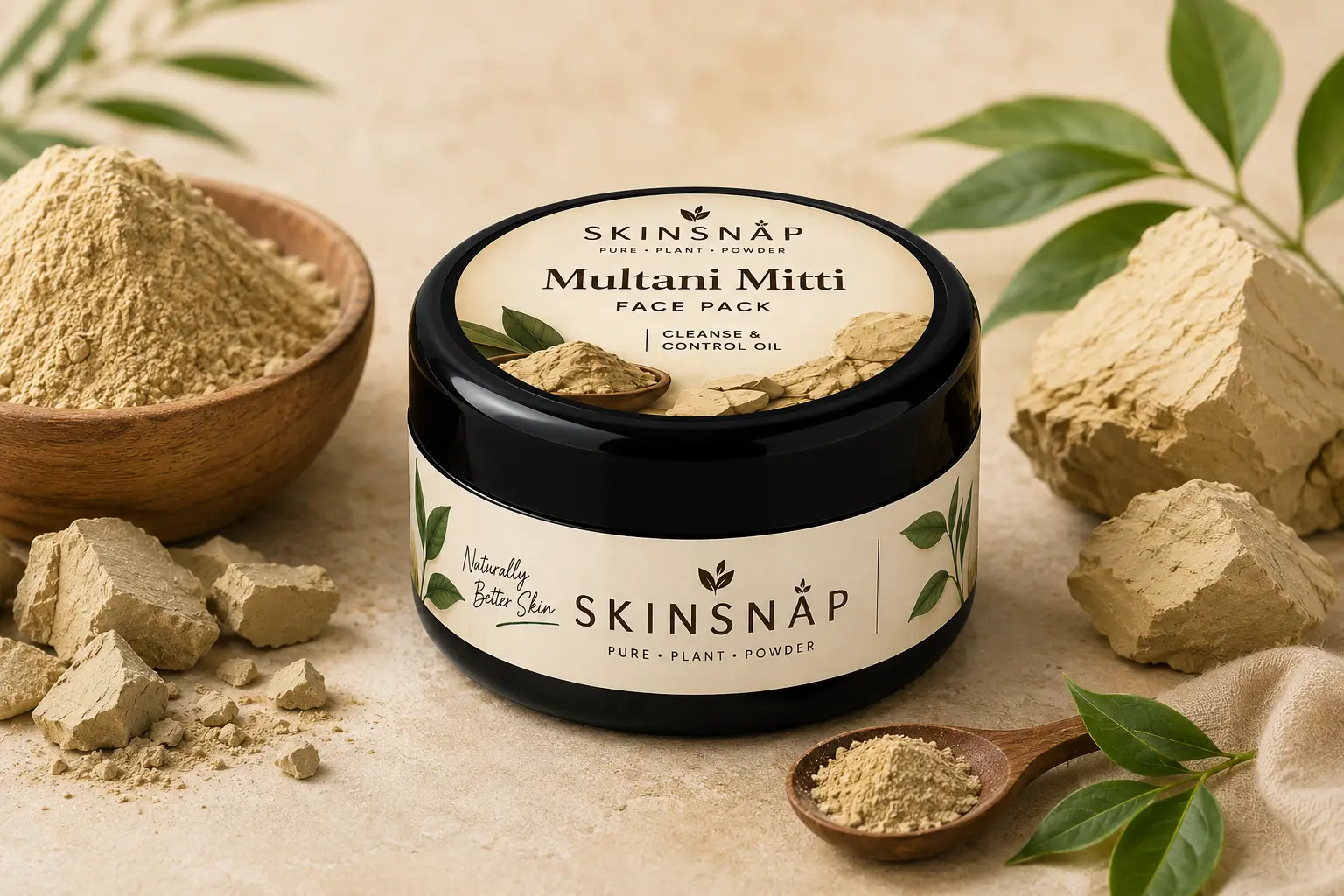
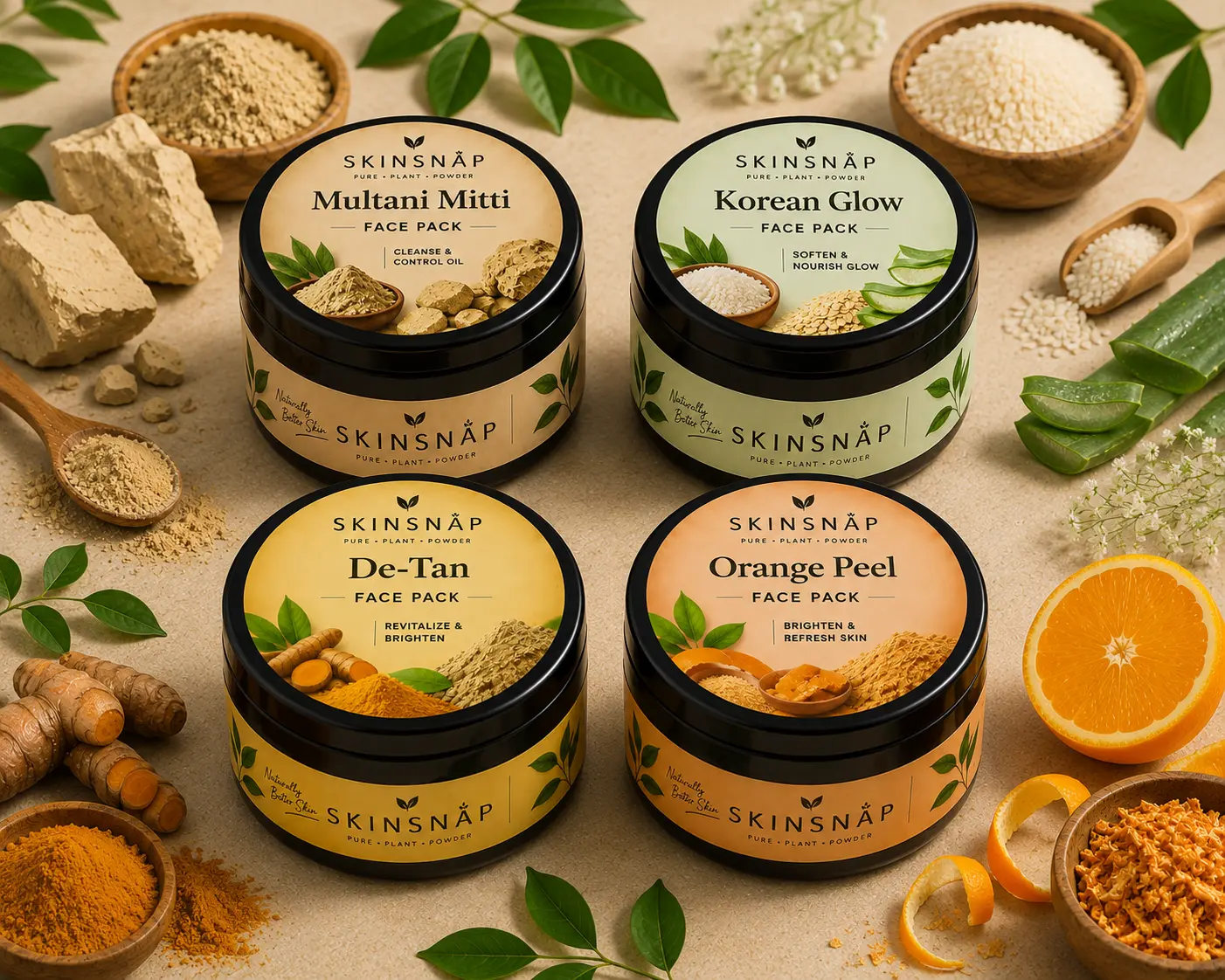
This is the gap SkinSnap closes for herbal powders like neem and multani mitti. Each 50g jar holds 100% natural powder, finely milled and sealed dry, ready whenever you are. Scoop a teaspoon or two into a bowl, add a little water or rose water, mix for 10 to 15 seconds into a paste, and apply — a freshly mixed pack every time, with no grinding, no sourcing, and no preservatives sitting in a jar for weeks.
Key Takeaways
- Neem helps with acne through antibacterial, antifungal, and anti-inflammatory action, alongside mild oil control.
- Use it two to three times a week, not daily, to avoid over-drying and irritation.
- Rinse the pack off when it's semi-dry, around 10 to 15 minutes, and always moisturise after.
- Neem pairs well with multani mitti for oil control and orange peel powder for fading old marks.
- Dry and sensitive skin should use neem less often and mix it with rose water instead of plain water.
- Neem is not a substitute for dermatologist care with deep, painful, or persistent acne.
Conclusion
Neem earns its place in Indian skincare cabinets for a real reason: it goes after the bacteria and inflammation behind breakouts, not just the surface oil. Used the right way — fresh paste, semi-dry rinse, two to three times a week, followed by moisturiser — it's one of the more dependable natural options for acne-prone and oily skin, monsoon or otherwise. Just keep expectations realistic; it calms and helps prevent, but stubborn acne still deserves a dermatologist's opinion.
Want to try neem's oil-control benefits alongside a proven clay base? Explore the SkinSnap Multani Mitti face pack or the 4-in-1 combo pack for oil control, brightening, and tan care in one box.
Frequently asked questions
No single ingredient removes pimples permanently. Neem's antibacterial and anti-inflammatory compounds can reduce breakouts and calm existing ones with regular use, but new pimples can still form from oil, hormones, or clogged pores. Think of it as ongoing maintenance, not a one-time cure.
It's better not to. Neem paste that dries fully on the skin for hours can pull out too much moisture and irritate sensitive areas. Leave it on for 10 to 15 minutes, until semi-dry, then rinse off and moisturise instead of sleeping with it on.
Two to three times a week works well for most oily and acne-prone skin. Daily use can strip natural oils and irritate the skin barrier, which sometimes makes breakouts worse instead of better. Start with twice a week and adjust based on how your skin responds.
It can, especially with frequent use or if left on until fully dry. Neem absorbs oil and has mild astringent properties, so dry and sensitive skin types should use it less often and always follow with a moisturiser to restore hydration.
Yes, neem and turmeric are a common combination in Indian skincare because both have anti-inflammatory properties. Turmeric adds a brightening effect alongside neem's antibacterial action against acne-causing bacteria. Use only a small pinch, since turmeric can temporarily stain lighter skin tones yellow.
Neem is generally gentle, but it can still cause irritation or dryness on very reactive skin. Do a patch test on your inner arm first, use it less frequently, and always dilute it well with a soothing liquid like rose water rather than plain water.
Neem supports skin cell turnover, which can gradually help fade shallow post-acne marks over several weeks of consistent use. It works slower than dedicated brightening ingredients like orange peel, so pair it with patience and, for deeper scars, a dermatologist consultation.
It's uncommon but possible, since any natural ingredient can trigger sensitivity in some people. Signs include redness, itching, or a burning feeling after application. Always patch test a small amount on your inner arm 24 hours before applying neem to your full face.
Rose water is the easiest and most balanced option, since it hydrates while the neem works on bacteria and oil. Some people also add a small amount of honey for extra soothing, though plain rose water keeps the mix simple and non-irritating.
They solve different problems. Multani mitti mainly absorbs oil and cleans pores, while neem adds antibacterial action against acne-causing bacteria. Many acne-prone routines benefit from both, either alternating between them or using a neem-multani mitti blend a few times a week.
Yes, neem is one of the gentler natural options for teenage acne, which is often linked to excess oil and bacteria. Start with once or twice a week, watch for any irritation, and see a dermatologist if breakouts are painful, deep, or not improving.
Neem has antifungal properties alongside its antibacterial action, which is one reason it's sometimes recommended during humid months when fungal acne (small itchy bumps) becomes more common. It's not a substitute for an antifungal treatment if the bumps persist or spread.
Try it the fresh way
This article is for general skincare information, not medical advice. Always patch-test a new product on your inner arm and wait 24 hours before applying it to your face.