You bought a big packet of multani mitti months ago. Today you open it and find hard lumps instead of soft powder, and maybe a slightly odd smell. Is it still safe? Did it expire? Should you just break the lumps and carry on?
This guide answers all of it plainly: why clay hardens, whether multani mitti really expires, how to store it properly, and when to throw it out.
Why Does Multani Mitti Go Hard and Clumpy?
The one-word answer: moisture. Multani mitti (fuller's earth) is hygroscopic, which means it naturally absorbs water from the air around it. That is exactly what makes it a great face pack; the same absorbency that pulls oil from your skin also pulls humidity from your room.
In an Indian climate, especially during monsoon or in a bathroom cabinet, an open or loosely closed packet is constantly drinking ambient moisture. The fine powder particles stick together, form clumps, and over weeks those clumps set hard. A packet that felt like soft flour in January can feel like small stones by August.
Hardening by itself is a physical change, not spoilage. But it is also a warning sign: a jar that lets in enough humidity to clump the powder is not sealing properly, and a poorly sealed jar is also more exposed to contamination over time.
Does Multani Mitti Expire? The Real Shelf Life
Pure, dry multani mitti is essentially a mineral, so it does not "expire" the way a biscuit does. But usable life is a different thing from mineral stability. Here are realistic numbers.
Pure multani mitti powder, stored airtight in a cool dry place and handled only with dry spoons, stays perfectly usable for around 2 to 5 years.
Pre-mixed commercial face packs (creams and pastes in tubes) are a different story: because they already contain water and other ingredients, they typically last 12 to 24 months even with preservatives, and less once opened.
Powder blends with added herbs, peels, or besan sit in between; the added organic ingredients degrade faster than the clay itself, so treat 1 to 2 years as a sensible limit.
The shelf life killer is rarely time. It is handling. Which brings us to the biggest mistake of all.
The wet spoon problem
Dipping a wet or damp spoon (or wet fingers) into your clay jar transfers water and bacteria directly into the powder. The clay clumps around that moisture, and bacteria and mould get a quiet, undisturbed home. Over weeks this shows up as a musty or sour odour, dark or discoloured patches, and stubborn hard lumps.
This is why a jar can go bad in three months while the "2 to 5 years" claim is still true: the number assumes clean, dry handling every single time.
How to Store Multani Mitti Properly
The good news: protecting your clay takes three habits, and none of them cost much.
Use an airtight container
Transfer the powder out of its original packet into a container with a tight-sealing lid, glass or good-quality plastic. Close it immediately after every use. Airtight storage alone prevents most hardening.
Keep it in a cool, dry place
Not the bathroom. Bathroom cabinets live in steam and humidity, the worst environment for a hygroscopic powder. A bedroom shelf or kitchen cupboard away from the stove and sink is far better. Away from direct sunlight too, especially for blends with herbal ingredients.
Dry spoon only, always
Keep a dedicated dry spoon with or near the container, and never scoop with wet hands. If you mix your pack in the bathroom, take out the powder first with dry hands in a dry room, then carry only that portion to the bathroom.
Can you rescue hardened multani mitti?
If the powder has merely clumped but smells and looks completely normal, yes: break the lumps, pass the powder through a fine sieve, and move it into an airtight container. Sun-drying the powder for a few hours on a clean dry cloth can also drive off absorbed moisture.
But discard it without hesitation if you notice any of these: a musty, sour, or "off" smell, visible dark spots or colour change, lumps that feel damp inside when broken, or a history of wet-spoon dipping. Clay is cheap; a skin infection is not. When in doubt, throw it out.
What Are the Signs Multani Mitti Has Gone Bad?
A quick checklist you can run in ten seconds. Smell it: fresh clay smells earthy and neutral, spoiled clay smells musty or sour. Look at it: uniform colour is fine, patches, spots, or any fuzzy growth are not. Touch it: dry lumps that crumble are recoverable, damp or greasy-feeling powder is not. And think back: if the jar has been open for years or handled carelessly, err on the side of replacing it.
If your clay passes the test, you are good to go; mix it fresh with rose water (here is why rose water beats plain water) and enjoy the benefits we cover in multani mitti face pack benefits. Also keep an eye on frequency; our guide on how often you should use a face pack has skin-type wise numbers.
Is There a Way to Skip the Storage Problem Entirely?
Everything in this article points one way: bulk clay is only as good as your storage discipline. Every open, close, scoop, and humid afternoon slowly works against your jar. Most people do not fail at face packs; they fail at storing loose powder for months.
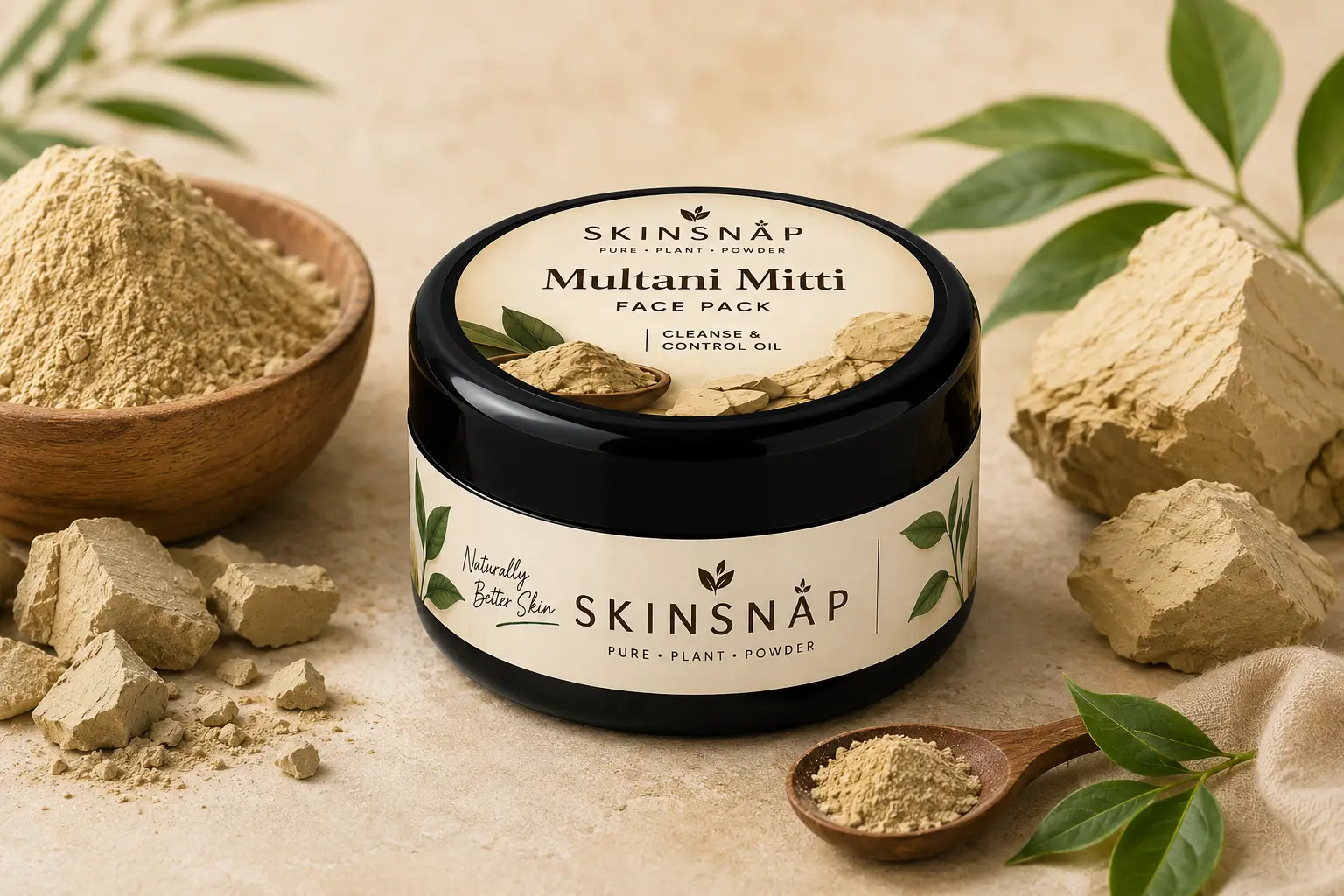
SkinSnap approached it from the product side: keep the clay dry until the second you mix it. The 50g jar holds 100% natural powder, sealed and dry, with no water added and no preservatives. As long as no moisture gets in — dry scoop, lid closed — there is nothing to harden and nothing to spoil. You mix only a teaspoon or two at a time with a little water or rose water, so the rest stays as dry as the day it was packed.
Store your bulk clay well, or sidestep the humidity problem with the sealed Multani Mitti jar and mix each pack fresh. Either way, your skin deserves clay that is as clean as the day it was packed.
Frequently asked questions
Pure multani mitti powder does not expire like food, but it does degrade. Stored airtight in a cool, dry place, it stays usable for around 2 to 5 years. Once it absorbs moisture, gets contaminated by wet spoons, or develops an odd smell or colour, it should be discarded.
Clay is hygroscopic, which means it pulls moisture from the air. In humid conditions or a loosely closed packet, the powder absorbs ambient moisture and forms clumps that harden over time. Hard clumps alone mean moisture exposure; combined with smell or discolouration, they mean contamination.
If it has only clumped slightly and smells and looks normal, you can break the lumps, sieve the powder, and use it after moving it to an airtight container. If it smells musty or sour, shows dark spots or colour change, or was touched with wet spoons, throw it away.
Keep it in an airtight container, in a cool and dry place away from the bathroom, and only ever scoop it with a completely dry spoon. Close the lid immediately after use. These three habits prevent both hardening and bacterial contamination.
Try it the fresh way

This article is for general skincare information, not medical advice. Always patch-test a new product on your inner arm and wait 24 hours before applying it to your face.