Ask anyone in India what to mix with a face pack, and the answer usually comes back in one word: gulab jal. Rose water has been part of home skincare for generations, and for good reason.
But most of us use it without knowing why it works, or why it pairs so well with clays like multani mitti. This article breaks down the real benefits of rose water for your face, how to use it correctly, and why it is the best liquid to activate a clay pack.
What Are the Real Rose Water Benefits for Face?
Rose water is made by steam-distilling rose petals. The result is a light, fragrant water that carries some of the rose's natural compounds. Here is what it genuinely does, without the exaggerated claims.
It gently tones and refreshes the skin
Rose water has a mildly balancing effect on skin. After cleansing, a splash of rose water can make skin feel calm and refreshed instead of tight and stripped. That is why it has been used as a simple toner long before modern toners existed.
It soothes irritation
Many people find rose water calming on skin that feels hot, itchy, or irritated after sun exposure or a harsh product. It will not fix a serious skin condition, but as everyday comfort for mildly annoyed skin, it does the job well.
It adds light hydration
Rose water is mostly water, so it hydrates the surface of the skin temporarily. It is not a moisturiser and will not replace one, but it gives skin a soft, dewy feel while it sits on the surface.
What rose water will not do
Let us be clear about limits. Rose water will not remove pimples overnight, permanently shrink pores, or lighten skin tone. Anyone promising that is overselling. Think of it as a gentle supporting player, not a miracle worker.
Why Use Rose Water with Multani Mitti Instead of Plain Water?
This is where rose water truly earns its place. Multani mitti (fuller's earth) is a powerful oil-absorbing clay, and clay needs a liquid to become a spreadable paste. You could use plain water, but rose water is the smarter choice for three reasons.
First, balance. Multani mitti pulls oil strongly, which is great for oily skin but can leave the face feeling dry and tight. Rose water softens that effect, so the pack cleans deeply without feeling harsh.
Second, comfort. A clay pack made with rose water feels cooler and more soothing on the skin, and the natural fragrance makes the whole ritual more pleasant.
Third, extra benefit in the same step. Instead of clay plus plain water, you get clay plus a mild toner, working together in one application. If you want the full picture on the clay itself, read our guide on multani mitti face pack benefits.
How Do You Mix Rose Water with a Face Pack Correctly?
Getting the ratio right matters more than people think. Too little rose water and the pack is lumpy and hard to spread. Too much and it drips off your face.
The right ratio and method
A good starting point is a simple 1:1 ratio — about 20 grams of powder to about 20 millilitres of rose water. Add the liquid slowly and mix until you get a smooth paste, smooth and spreadable, like well-stirred dahi.
Apply an even layer on clean skin, avoiding the eye and lip area. Let it sit for 10 to 15 minutes, until it is mostly dry but not cracking. Rinse with plain water, pat dry, and follow with a light moisturiser.
Small details that improve results
Always mix in a clean, dry bowl with a clean spoon. Use the paste immediately after mixing, because a clay and rose water mixture has no preservatives and starts degrading within hours. Never store leftover paste for the next day; it can grow bacteria you cannot see.
Also, do not overdo the frequency. A clay pack two to three times a week is plenty for oily skin. If you are unsure how often is right for you, we cover this in detail in how often should you use a face pack.
Which Face Packs Pair Best with Rose Water?
Rose water is a flexible base and works with almost every traditional Indian face pack ingredient.
With multani mitti, it makes the classic oil-control and deep-cleansing pack. With orange peel powder, it creates a brightening pack with a fresh citrus-rose scent. With turmeric-based mixes, it helps with tan removal routines, which we explain in how to remove tan at home.
The common thread is simple: whatever the powder, rose water makes it smoother to mix, gentler to wear, and nicer to use.
Why Freshly Mixed Rose Water Packs Work Best
Here is the part most people miss. The magic of rose water and clay happens at the moment they meet. Once mixed, the paste starts losing freshness. And bottled rose water itself, once opened, sits exposed to air and repeated handling for weeks.
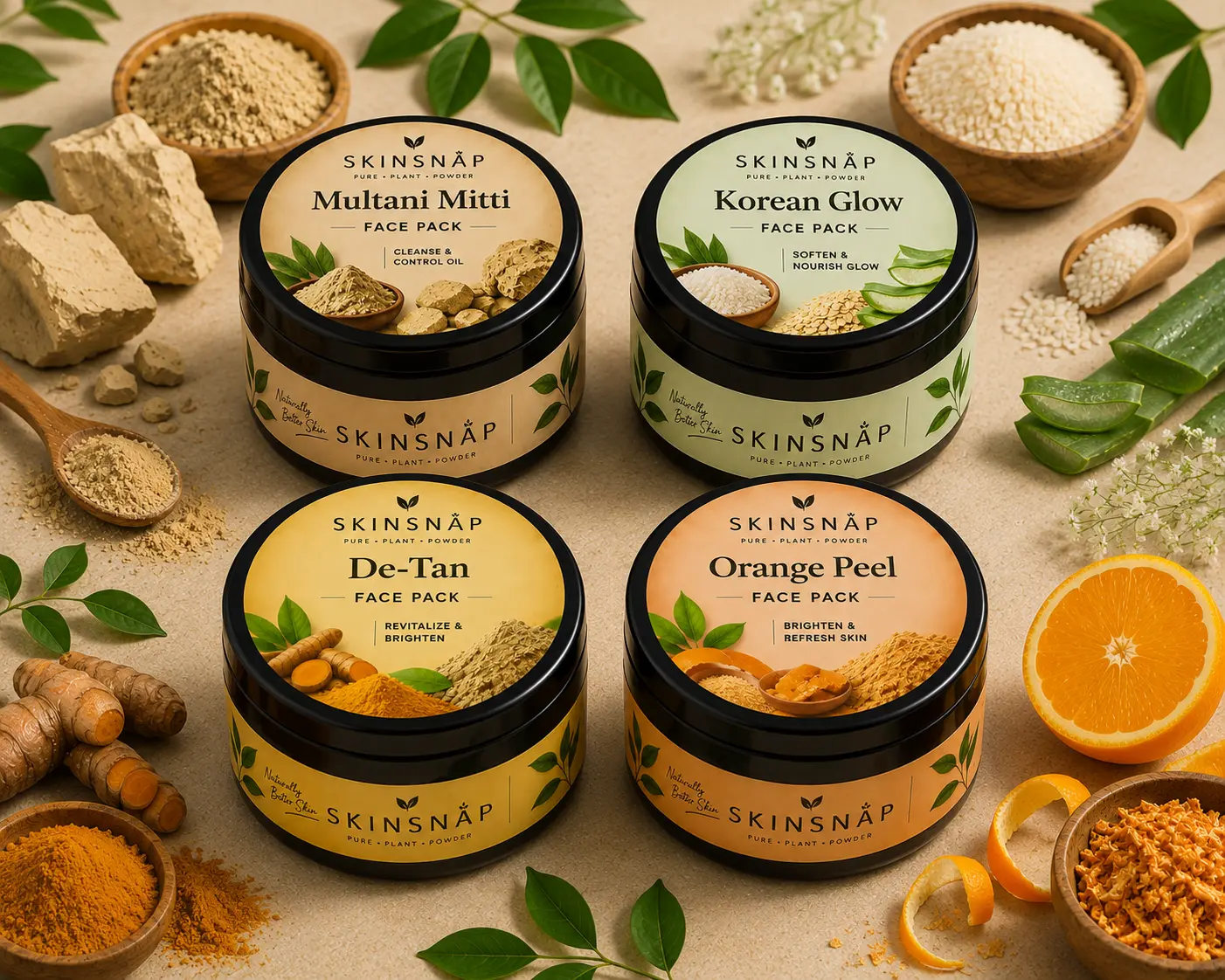
That is the exact problem SkinSnap's powders are built around. Each 50g jar holds 100% natural clay-and-botanical powder, kept dry and unmixed, and designed to be brought to life with your own fresh rose water — the ideal liquid to stir it into a paste. You add the gulab jal at the moment you use it, so the pairing is always as fresh as your bottle, never something pre-mixed and left to fade.
If you love the gulab jal and clay ritual but want it fresh and hygienic every time, the SkinSnap Combo Pack lets you try all four variants, each ready to mix with the rose water of your choice.
Rose water has earned its centuries-old reputation. Use it fresh, use it right, and your skin gets the best of it.
Frequently asked questions
You can mix them any time, but do not apply a clay pack daily. Two to three times a week is enough for oily skin, and once a week for dry or sensitive skin. On other days, you can use rose water alone as a gentle toner.
Yes, for most people. Plain water only wets the clay, while rose water adds a mild toning effect, a pleasant fragrance, and a soothing feel. It also helps the pack feel less harsh and drying on the skin.
Check the label for added fragrance, colour, or preservatives like parabens. Pure steam-distilled rose water has a soft, natural smell, not a strong perfume-like one. Once opened, preservative-free rose water is best kept in the fridge and used within a few months; commercial bottles with preservatives last longer, so check the label.
Generally yes, because it is lightweight and does not clog pores. It works well as a base for clay packs that absorb excess oil. If your acne is severe or painful, it is best to consult a dermatologist rather than rely on home care alone.
Try it the fresh way
This article is for general skincare information, not medical advice. Always patch-test a new product on your inner arm and wait 24 hours before applying it to your face.