The best face pack for combination skin is a mild, balancing clay such as multani mitti mixed with rose water, used once or twice a week and rinsed off before it fully dries. It absorbs oil from the T-zone without stripping the cheeks. For a sharper oily-dry split, apply clay only on the T-zone and leave the cheeks bare.
Combination skin is the most common skin type in India, and also the most badly served by skincare advice. Almost every product is labelled for either oily or dry skin, which leaves anyone with a greasy nose and flaky cheeks guessing. This guide covers how to identify combination skin properly, which face pack ingredients genuinely balance both zones, and the multi-masking method that solves the problem most single products cannot.
What Is Combination Skin, Exactly?
Combination skin means different areas of your face produce noticeably different amounts of oil. The T-zone (forehead, nose, and chin) runs oily, while the cheeks and the area around the jaw stay normal or dry.
The reason is anatomical rather than mysterious. Sebaceous glands are not spread evenly across the face. The forehead and nose carry a much higher density of them than the cheeks do, which is why those areas shine first and clog first. In some people, that difference is mild enough to go unnoticed. In others, the gap is wide enough that one half of the face behaves like oily skin and the other half like dry skin.
How to know if you have combination skin
The tissue-blot test is the simplest check and takes about two hours.
- Wash your face with a gentle cleanser and pat it dry.
- Apply nothing at all afterwards — no moisturiser, no serum, no sunscreen.
- Wait two hours in a normal indoor environment.
- Press a clean tissue against the forehead, nose, chin, and both cheeks separately.
If the T-zone tissues come away with visible oil marks while the cheek tissues stay clean, you have combination skin. If everything is oily, you have oily skin. If nothing is, and the skin feels tight, it is dry.
The signs people miss
- Pore size varies across your face. Visible pores on the nose and inner cheeks, barely-there pores near the jaw.
- Makeup behaves differently by zone. Foundation slides off the nose by lunchtime but clings to dry patches on the cheeks.
- Blackheads on the nose, flakiness on the cheeks. Both at once, in the same week.
- Products never quite fit. Oily-skin products leave the cheeks tight; dry-skin creams cause congestion on the forehead.
Why Do Most Face Packs Fail on Combination Skin?
Because they treat the face as one uniform surface. A strong oil-absorbing pack does its job on the T-zone and over-dries the cheeks. A rich, hydrating pack comforts the cheeks and leaves the nose congested by morning.
There is a second, subtler problem. A lot of combination skin is not truly "part oily, part dry" — it is dehydrated skin with an oily T-zone. When the barrier loses water, oil glands often ramp up production to compensate. The skin then feels greasy on the surface and tight underneath at the same time. Attacking that with stronger oil-stripping products makes the cycle worse, not better.
This is why the instinct to reach for the harshest clay available usually backfires. The goal is balance, not maximum absorption.
Which Face Pack Ingredients Work Best for Combination Skin?
Some natural ingredients are unusually well-suited to combination skin because they moderate oil without stripping. Here is how the common ones compare.
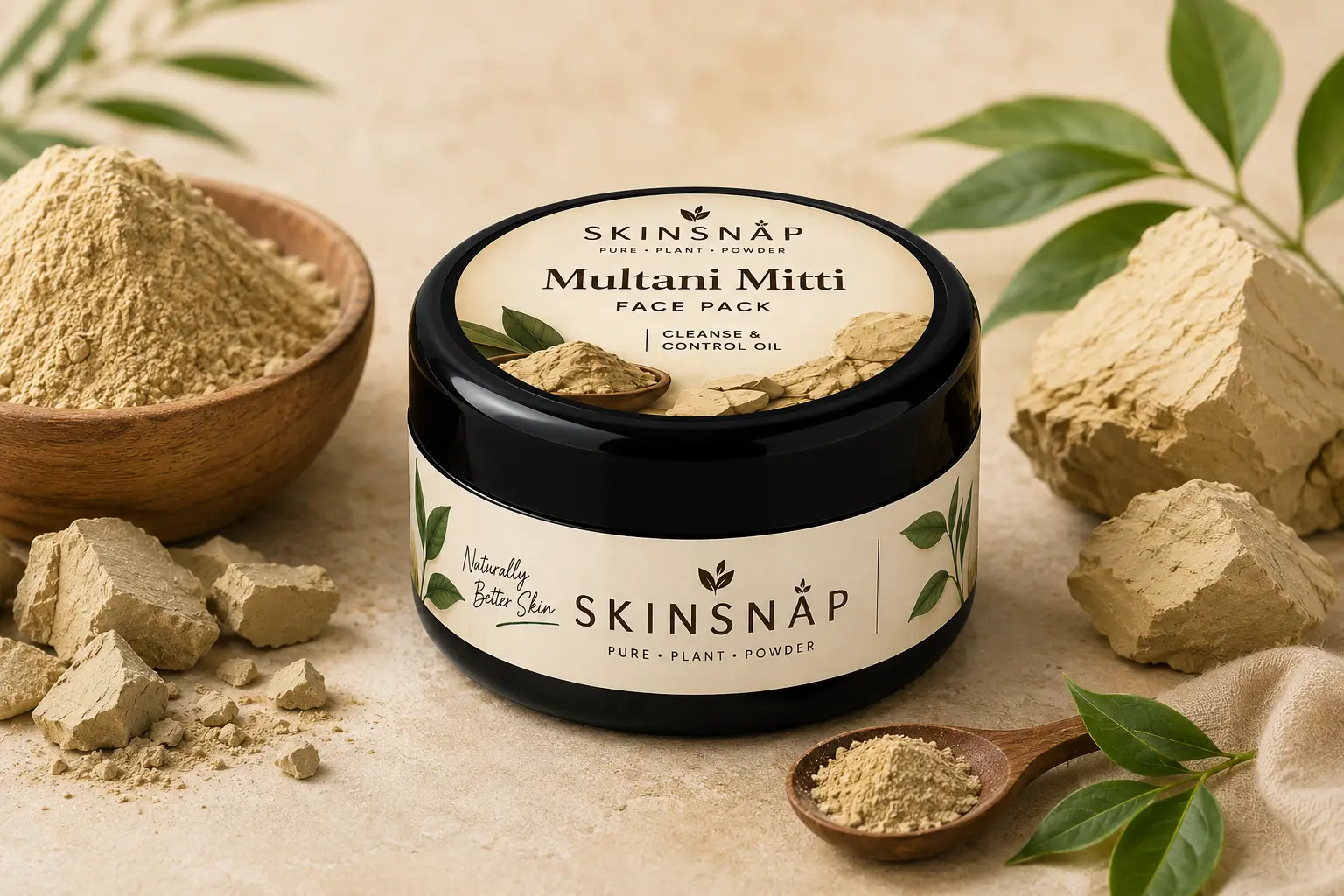
Multani mitti
The most reliable all-rounder. Multani mitti absorbs surface oil effectively but is milder than activated charcoal or bentonite clay, which means it can go across the whole face without wrecking the cheeks. The catch is timing — it has to come off while still slightly damp. A multani mitti pack left until it cracks will pull moisture out of the dry zones along with oil from the T-zone.
Rose water
Less an active and more a fix for the biggest problem with clay on combination skin. Using rose water as your mixing base instead of plain water keeps the paste softer, slows how fast it sets, and adds a light hydrating layer to the cheeks while the clay works on the T-zone. For combination skin specifically, this single swap makes more difference than changing the clay itself.
Sandalwood
Gentle, cooling, and mildly astringent rather than aggressively drying. Sandalwood suits combination skin that leans sensitive, since it calms redness on the cheeks while still helping with T-zone oil. It is a slower-acting ingredient than clay, so it works better as a soothing addition than a primary oil control step.
Aloe vera
Best used on the dry zones. Aloe vera is water-based, lightweight, and non-comedogenic, so it hydrates the cheeks without adding to the T-zone problem. In a multi-masking setup, this is the natural partner to clay.
Charcoal — use with care
Charcoal is a strong adsorbent, better at pulling debris from clogged pores than multani mitti. On combination skin it is a T-zone-only ingredient. Applied across the cheeks, it strips them noticeably. If nose congestion is the main complaint, a charcoal strip across just the T-zone once a week is the sensible way to use it.
Turmeric
Useful for the inflammatory side of combination skin, where the T-zone breaks out. Turmeric is anti-inflammatory rather than oil-absorbing, so it addresses the redness around spots rather than the oil that caused them. Small quantities only, and always mixed into a base rather than applied neat.
How Do You Multi-Mask for Combination Skin?
Multi-masking means using two different packs on two different zones in the same session. It sounds fussy but adds maybe three minutes and solves the core problem of combination skin — that one product cannot serve two needs.
Step 1: Cleanse and leave the skin slightly damp
Wash with a gentle, non-foaming cleanser and pat until the skin is damp rather than dripping. Slightly damp skin lets clay spread thinner and more evenly, which matters when you are trying to keep the layer light on the cheeks.
Step 2: Mix the clay with rose water, not plain water
Aim for a smooth paste roughly the consistency of thick yogurt. Too thin and it runs off the nose before it can do anything. Too thick and it sets hard and cracks. Mix fresh each time — clay paste that has sat around loses the properties that made it worth using, which is part of why pre-mixed jarred packs behave differently from freshly mixed ones.
Step 3: Apply the clay to the T-zone only, or thicker on the T-zone
Two approaches work here:
- Strict multi-masking: clay across the forehead, nose, and chin only. Nothing on the cheeks.
- Graduated single mask: a normal layer on the T-zone, a deliberately thin layer on the cheeks.
Start with the graduated version. If the cheeks still feel tight afterwards, switch to strict multi-masking.
Step 4: Add a hydrating layer to the cheeks
While the clay sits, apply aloe vera gel or a rose-water-soaked cotton pad to the cheeks. This is the whole point of multi-masking — both zones getting what they actually need at the same time.
Step 5: Rinse the T-zone first, then everything
Clay dries faster on the oily T-zone than on the cheeks, but the cheeks are what suffer from over-drying. After ten to twelve minutes, check the T-zone with a fingertip. Rinse the moment the clay feels set but not cracked. Never let it go fully hard and flaky.
Step 6: Moisturise both zones, differently
A lightweight gel moisturiser across the whole face, then a slightly richer layer on the cheeks only if they still feel tight. Skipping moisturiser on the T-zone is a common mistake — dehydrated skin produces more oil, not less.
How Often Should You Use a Face Pack on Combination Skin?
Once or twice a week for a full-face clay pack, and up to twice a week for a T-zone-only pack. Combination skin does better on a split schedule than a single blanket frequency.
- T-zone clay pack: twice a week is comfortable for most people.
- Full-face clay pack: once a week at most.
- Hydrating pack on cheeks: two to three times a week, no real downside.
- Charcoal on T-zone: once a week, and only if congestion is a genuine problem.
The general principles behind these numbers, and why exceeding them backfires, are covered in more depth in our guide on how often you should use a face pack.
What Mistakes Make Combination Skin Worse?
The most damaging ones are treating the whole face as oily, and letting clay dry completely. Here is the full list.
- Treating the whole face as oily. The most common error by a distance. Products chosen for the T-zone get applied everywhere, and the cheeks pay for it.
- Letting the clay dry completely. A fully cracked pack is not working harder. It is pulling water from wherever it can find it, which means the dry zones.
- Using alcohol-based toners. They deliver a satisfying tight feeling and a dehydrated barrier a few hours later, which raises oil production in the T-zone.
- Over-cleansing the T-zone. Washing four times a day to control shine strips the barrier and triggers rebound oiliness.
- Skipping sunscreen because it feels greasy. Skipping it causes pigmentation and barrier damage that make both zones harder to manage. A gel-based SPF solves the texture complaint.
- Switching products constantly. Combination skin takes three to four weeks to respond. Changing the routine every ten days means never seeing whether anything worked.
- Using abrasive scrubs on flaky cheeks. Flakiness on combination skin is usually dehydration, not dead skin buildup. Scrubbing irritates it further.
Combination Skin vs Other Skin Types: What Changes?
Combination vs oily skin
Oily skin shines across the entire face, cheeks included, and rarely feels tight after cleansing. Combination skin shines only in the T-zone. The practical difference is that oily skin can tolerate a strong clay pack over the whole face; combination skin cannot.
Combination vs dry skin
Dry skin feels tight everywhere and flakes in multiple areas, including the forehead. Combination skin has flakiness restricted to the cheeks or jawline while the forehead stays oily. Dry skin needs richer products throughout; combination skin needs them in specific places only.
Combination vs dehydrated skin
This is the confusing one, because dehydration is a condition rather than a skin type, and it can happen to any type. Dehydrated skin feels tight and looks dull but may still be oily. If your "combination skin" appeared suddenly after a change in products, weather, or cleansing habits, it may be dehydration rather than a genuine skin type — which means the fix is hydration, not oil control.
Combination vs sensitive skin
Sensitivity is about reactivity — stinging, redness, flushing — not oil distribution. The two overlap frequently. Combination skin that is also sensitive should skip charcoal entirely and stick with multani mitti and sandalwood at lower frequency.
Does Combination Skin Behave Differently Across Indian Seasons?
Yes, and quite noticeably.
Monsoon (June to September). Humidity climbs sharply, and the T-zone produces more oil in response while the barrier stays dehydrated underneath. The oily-and-tight contrast gets sharper. Lighter gel textures work better than switching to anything heavier, and one clay session a week is usually enough. The broader logic here overlaps with our monsoon skincare routine for oily and acne-prone skin, with the caveat that the cheeks need more hydration than a purely oily-skin routine allows for.
Summer (March to May). Everything shifts oilier, and combination skin can temporarily look like oily skin. Sweat and sunscreen together congest the T-zone. Two light clay sessions a week and a non-negotiable gel sunscreen handle most of it.
Winter (October to February). The reverse. The cheeks get considerably drier while the T-zone stays oily, widening the gap. This is the season where strict multi-masking earns its keep — clay confined to the T-zone, richer hydration on the cheeks.
Can Combination Skin Get a Glow Without Getting Oily?
Yes, and the route is different from what oily skin uses. Chasing glow on combination skin through heavy oils or occlusive layers will congest the T-zone within days. Chasing it through aggressive exfoliation will irritate the cheeks.
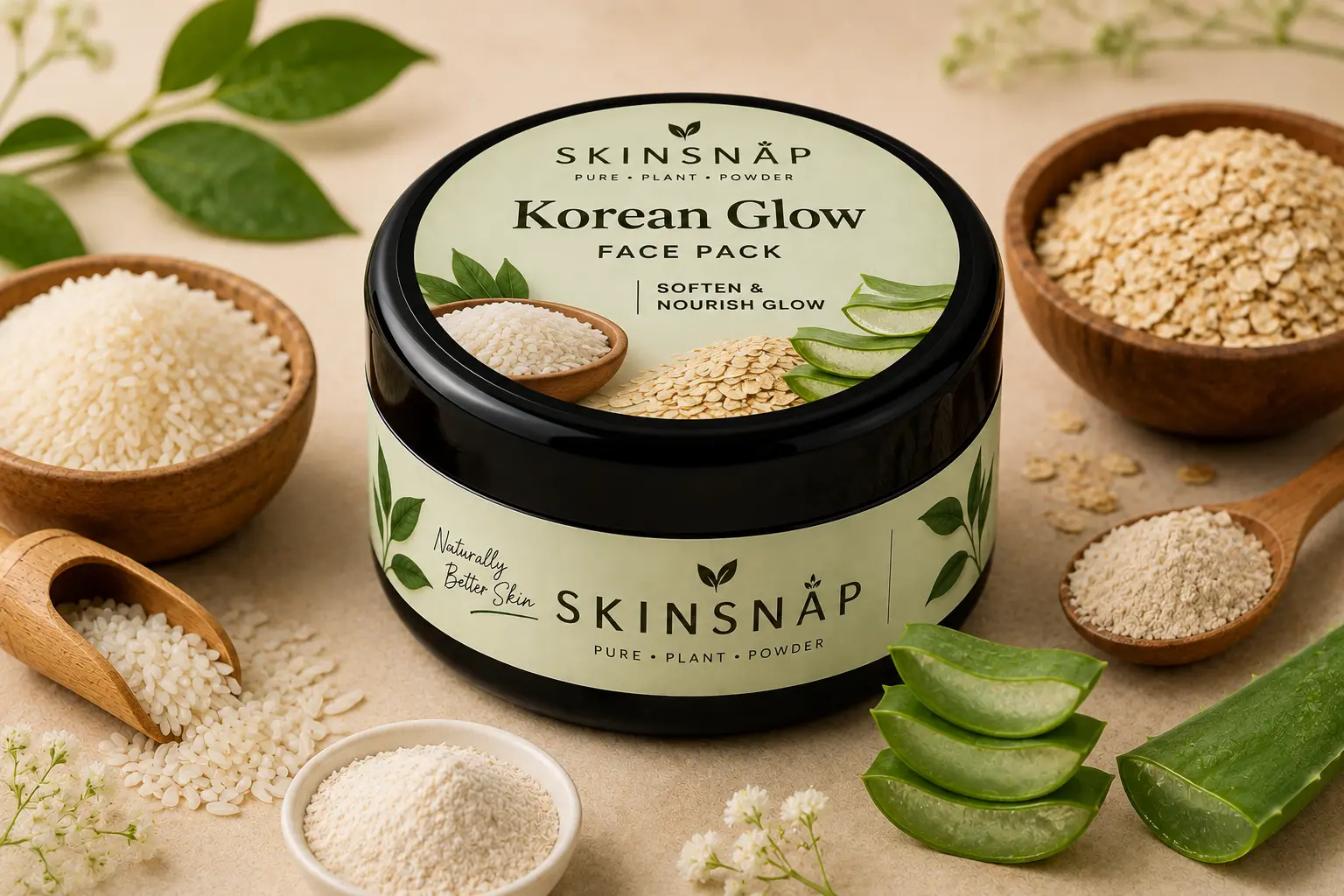
What works instead is hydration plus gentle brightening. Water-based hydration plumps the dry zones so light reflects evenly, and mild brightening ingredients like orange peel address dullness without adding oil. The layered hydration approach in the Korean glass skin routine suits combination skin well for this reason — it builds glow through water content rather than oil content.
If your combination skin also carries uneven tan from sun exposure, tan removal is worth addressing separately, since patchy tan reads as dullness even on well-hydrated skin.
What About Freshness and Storage?
One practical issue specific to combination skin: because you are likely using clay only once or twice a week, and only on part of your face, a bulk tub of multani mitti will sit open for a very long time. Clay absorbs moisture from the air, hardens, and picks up whatever is in the storage environment. Our guide on why bulk multani mitti goes hard covers the shelf-life details, but the short version is that infrequent users get the worst of it.
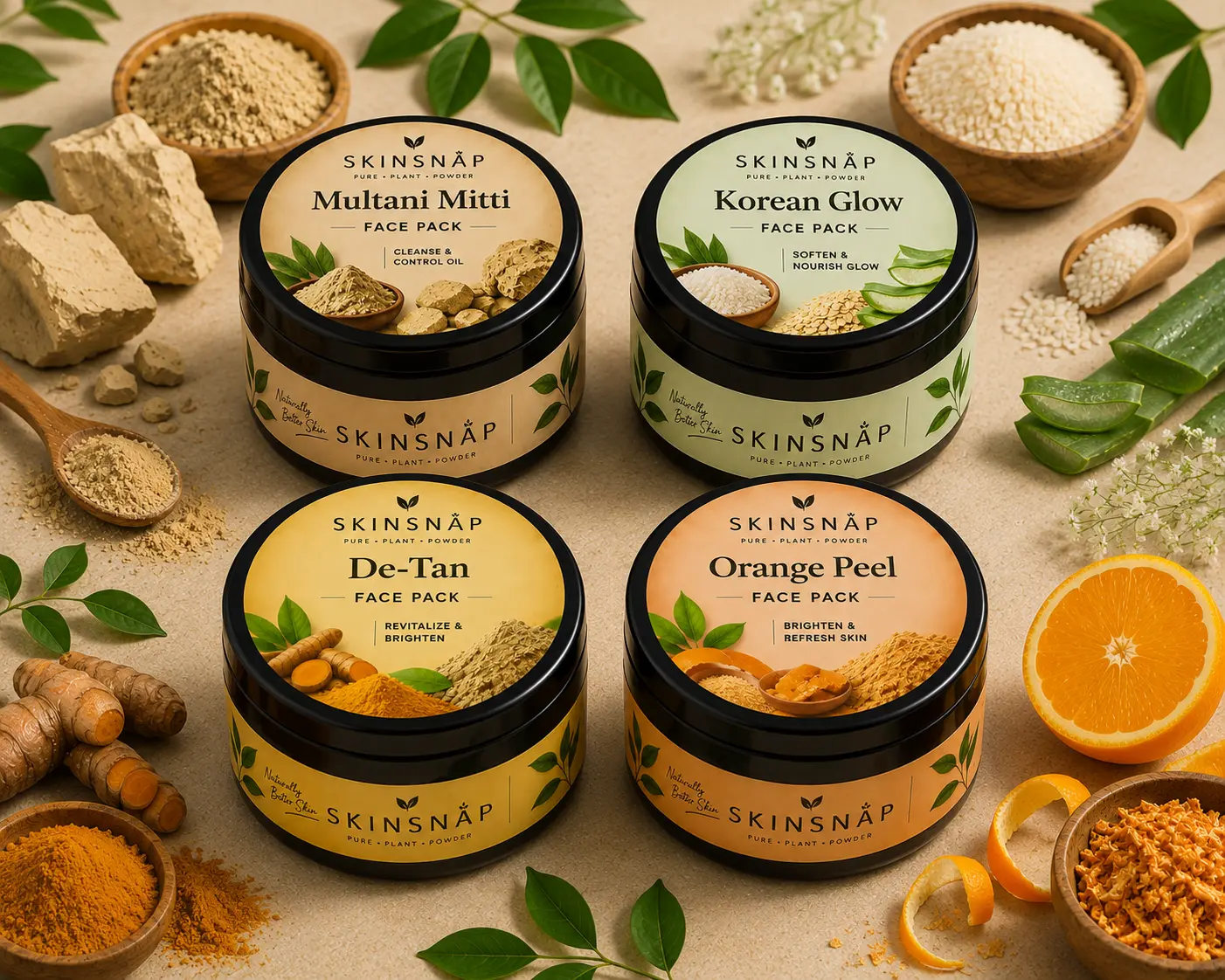
Single-use sachets sidestep this. SkinSnap uses a dual-chamber pouch that holds fresh clay and pure rose water separately and mixes them only at the moment of use, which is the format the SkinSnap multani mitti face pack is built around. For combination skin, the practical advantage is that every session starts with clay at full strength and paste at the right consistency, rather than a hardened lump that needs extra water to loosen — and the rose water base is already the gentler mixing liquid this skin type needs.
Key Takeaways
- Combination skin means an oily T-zone alongside normal or dry cheeks, caused by uneven sebaceous gland density.
- Multani mitti mixed with rose water is the most reliable single face pack for combination skin, used once or twice a week.
- Multi-masking — clay on the T-zone, hydration on the cheeks — solves what no single product can.
- Never let a clay pack dry fully; rinse while it is set but still slightly damp.
- Oily-and-tight at the same time usually signals dehydration, which needs hydration rather than more oil control.
- Monsoon widens the oily-dry gap; winter widens it in the opposite direction. Adjust by season.
- Give any routine three to four weeks before judging it.
Conclusion
Combination skin is not two problems stapled together — it is one skin doing two things at different rates. Once you stop trying to find a single product that fits both zones and start treating them separately, most of the frustration disappears. A mild clay on the T-zone, hydration on the cheeks, rinsed before it dries, once or twice a week. That is the whole method.
If you want to try it without committing to a bulk tub that will harden before you finish it, the 4-in-1 combo pack includes multani mitti for T-zone oil control alongside brightening and glow packs for the drier zones.
Frequently asked questions
A mild, balancing clay like multani mitti mixed with rose water suits most combination skin. It absorbs oil from the T-zone without stripping the cheeks the way a strong charcoal or heavy mud pack can. Used once or twice a week and rinsed off while still slightly damp, it keeps both zones comfortable.
Blot your face with tissue two hours after washing, using nothing else. If the forehead, nose, and chin leave oil marks while the cheeks stay clean or feel slightly tight, that is combination skin. Enlarged pores in the T-zone alongside normal-sized pores on the cheeks is another reliable sign.
Multi-masking means applying different packs to different zones at the same time, such as clay on the T-zone and something hydrating on the cheeks. It helps because combination skin has two different needs in one face. One product applied everywhere will always over-treat one area.
Once or twice a week is the right range for most combination skin. Applying a full-face clay pack more often tends to dry out the cheeks before the T-zone sees much benefit. If you want more frequency, use clay only on the T-zone for the extra session.
Yes, when used correctly. Multani mitti absorbs surface oil but is gentler than charcoal or bentonite, so it works across both zones. The key is rinsing before it fully cracks and dries, since a fully hardened clay pack pulls moisture from the cheeks along with oil from the T-zone.
That combination usually means dehydration, not oiliness. When the skin barrier loses water, oil glands often compensate by producing more sebum. The result is a greasy surface over dehydrated skin underneath. Adding hydration rather than more oil-stripping products is what fixes it.
You can, but keep the layer thin and rinse it off sooner than you would on the T-zone. Mixing the clay with rose water rather than plain water helps too. If the cheeks feel tight after every session, restrict the clay to the T-zone and leave the cheeks bare.
Often, yes. Indian monsoon humidity pushes the T-zone into producing more oil while the barrier stays dehydrated underneath, so the oily-and-tight contrast gets sharper. Lighter gel moisturisers and one clay session a week usually manage it better than switching to heavier products.
No. Skipping moisturiser on the T-zone tends to make the oiliness worse over time, because dehydrated skin signals the glands to produce more sebum. A lightweight gel moisturiser across the whole face, with a slightly richer layer on the cheeks if needed, works better.
Yes, it works well as a mixing base because it hydrates the cheeks while carrying the clay's oil-absorbing action to the T-zone. It also keeps the paste from setting rock-hard, which is the main reason clay packs leave combination skin feeling stripped in patches.
Yes. Skin type shifts with age, season, hormones, and even the products used. Many people who had oily skin in their twenties move towards combination in their thirties. Rechecking with the tissue-blot test every few months is more useful than assuming one label forever.
Strong alcohol-based toners, harsh foaming cleansers, and heavy mineral-oil creams all tend to backfire. The first two dry out the cheeks, the last clogs the T-zone. Very abrasive scrubs are also a poor fit, since they irritate the dry zones while barely touching T-zone congestion.
Around three to four weeks of consistent use. Oil control in the T-zone usually shows within a week or two, while the cheeks take longer to stop feeling tight, since barrier repair is a slower process. Judging results after a single session is not realistic.
Try it the fresh way
This article is for general skincare information, not medical advice. Always patch-test a new product on your inner arm and wait 24 hours before applying it to your face.