Turmeric helps skin mainly through curcumin, a compound with anti-inflammatory and antibacterial properties that calm redness and add a gradual glow. It does not lighten your natural skin tone — used wrong (too strong, too often, left on too long) it mostly just leaves you scrubbing off a yellow stain.
Turmeric has been part of Indian skincare long before "curcumin" showed up in ingredient lists. Every household seems to have an opinion on it, from haldi ceremonies to grandmothers dabbing paste on stubborn pimples. Some of that reputation is earned. Some of it is exaggeration. This guide separates the two, and walks through how to actually use turmeric on your face without turning it into a mess.
What Does Turmeric Actually Do for Your Skin?
Turmeric's active compound, curcumin, is where almost all of its skin benefits come from. On its own, dried turmeric powder does very little; it needs to be mixed into a paste and applied directly to work.
Calming redness and inflammation
Curcumin has well-documented anti-inflammatory properties, which is why turmeric paste is a common home remedy for irritated or inflamed skin. Applied to an active breakout, it can take some of the redness and swelling down a notch, though it will not clear the underlying cause on its own.
Mild antibacterial support
Turmeric has some natural antibacterial activity, which is part of why it's traditionally paired with neem for acne-prone skin. It is a supporting player here rather than the main event — you can read more about neem's stronger antibacterial role in our neem face pack for acne guide.
A gradual, gentle brightening effect
Turmeric paste has a light exfoliating quality that helps lift dull, dead surface cells, which is what creates that "instant glow" people notice right after a haldi pack. This is surface brightening, not a permanent change to your skin's pigment.
Antioxidant protection
Curcumin is an antioxidant, meaning it helps neutralise some of the everyday environmental stress your skin deals with — sun, pollution, and general wear. This is a slow, cumulative benefit rather than something you'll feel after one use.
Does Turmeric Really Make Skin Fair? (The Honest Answer)
No, and this is the most common myth around turmeric. Fairness and brightness are two different things. Turmeric can make skin look brighter and fresher by clearing away dullness on the surface, similar to what orange peel powder does for brightening. It cannot change your melanin levels or your actual skin tone, no matter how many times you apply it or how long you leave it on.
If a product or a family member promises turmeric will make you "fair," that promise is not backed by how skin actually works. What turmeric can genuinely deliver is fresher-looking, calmer skin with regular, correctly done use — which is a real benefit, just not the one the myth describes.
How Do You Use a Turmeric Face Pack the Right Way?
Turmeric is easy to overdo, since a little goes further than it looks. Here's a simple routine that keeps the benefits without the staining and irritation.
Step 1: Cleanse your face first
Start with a clean, dry face, free of makeup or leftover sunscreen. Applying turmeric over a layer of product just traps it underneath instead of letting the paste work on your actual skin.
Step 2: Mix a small, fresh paste
Use a small pinch of turmeric powder, roughly a quarter to half a teaspoon, mixed with rose water until you get a smooth, thin paste. More turmeric does not mean more benefit; it mainly means more staining. Rose water is the gentler activating liquid here, and we explain why in rose water for face.
Step 3: Apply a thin, even layer
Spread a thin layer over your face, avoiding the eyes, eyebrows, and hairline, where staining is most stubborn to remove. A thick layer does not speed up results and only raises the risk of yellow staining lasting longer.
Step 4: Rinse before it fully dries
Wash it off with lukewarm water once the pack is semi-dry, usually within 10 to 15 minutes. Letting turmeric dry and crack fully on the skin increases staining and can leave the skin feeling tight.
Step 5: Moisturise and check for any staining
Follow with a light moisturiser. If you notice a mild yellow tint, do not panic — it fades within a few hours to a day on its own, faster if you rinse with a mix of milk or curd and water.
How Often Should You Use Turmeric on Your Face?
Two to three times a week is the practical upper limit for oily and normal skin. Dry or sensitive skin does better with once a week, always followed by a moisturiser. This is roughly the same frequency logic that applies to most natural face packs, which we cover in more detail in how often should you use a face pack.
Daily use is a common mistake people make when they see quick results and assume more is better. In practice, daily turmeric application raises the odds of irritation and stubborn staining without adding any extra skin benefit.
Mistakes to Avoid With Turmeric Face Packs
A handful of habits quietly undo the good turmeric can do.
- Using too much powder at once. A little turmeric works as well as a lot. Overloading the paste only increases staining without extra benefit.
- Mixing it with lemon juice. Lemon is acidic and increases sun sensitivity, which is a bad combination with a brightening ingredient you'll be applying in daylight.
- Leaving the paste on until it fully dries and cracks. This raises staining risk and pulls extra moisture from the skin for no added benefit.
- Expecting it to lighten your natural skin tone. Turmeric brightens dullness on the surface; it does not change your underlying pigment.
- Skipping the patch test. Even gentle natural ingredients can irritate reactive skin, so testing on your inner arm first avoids a surprise on your face.
- Applying it right before stepping out. Give the stain and any mild redness time to settle before heading out, especially for events or photos.
Turmeric vs Other Natural Skincare Ingredients
Turmeric is useful, but it's rarely the whole story. Here's how it stacks up against other ingredients common in Indian skincare.
Turmeric vs neem
Neem is the stronger antibacterial option for active acne, while turmeric leans more toward calming inflammation and adding a gentle glow. They're frequently combined for exactly this reason, with neem tackling the bacteria and turmeric taking the edge off the redness.
Turmeric vs multani mitti
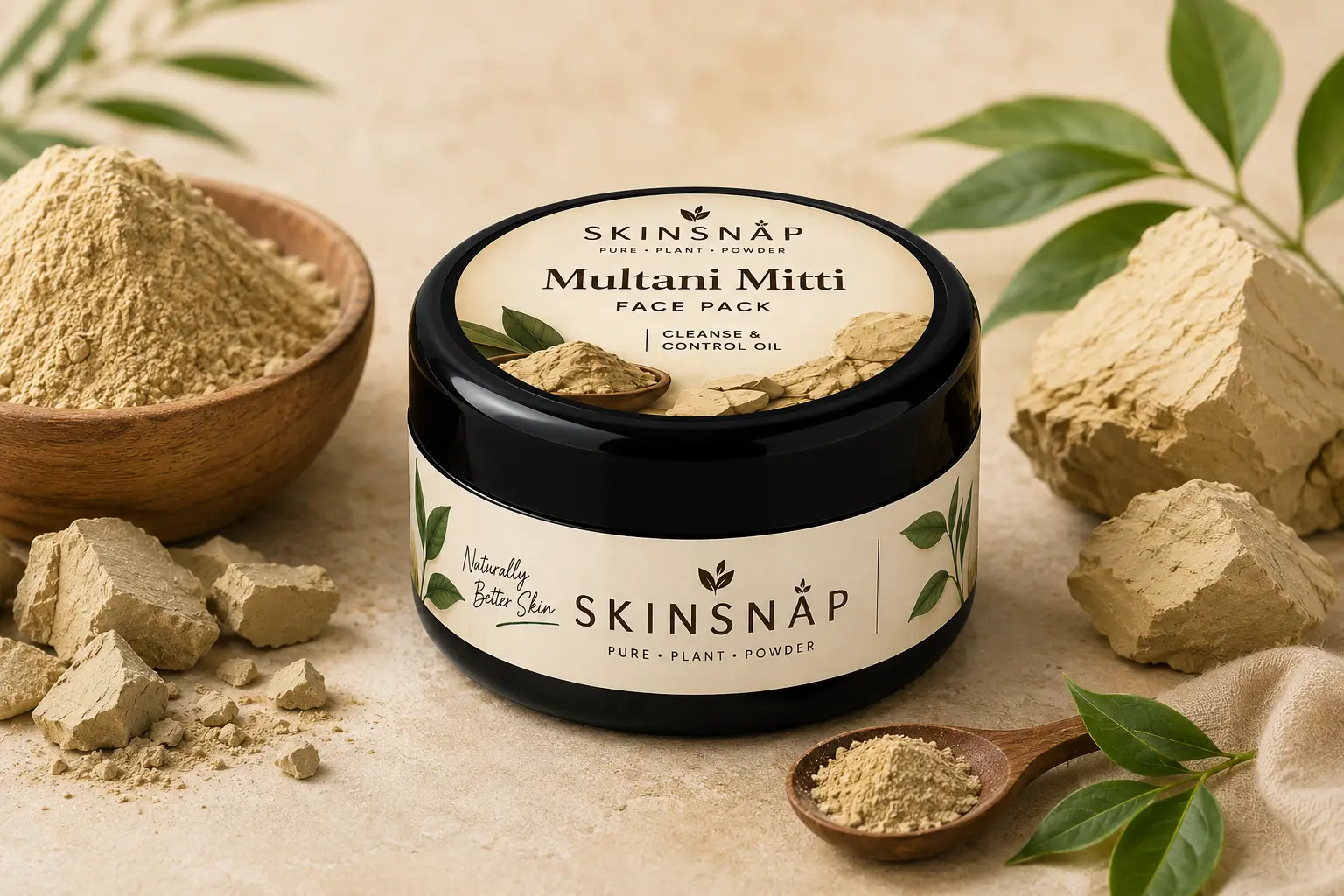
Multani mitti's main job is absorbing oil and deep-cleaning pores, which is a different function from turmeric's brightening and calming effect. Combining both in one routine, as in a multani mitti face pack, covers oil control and glow together.
Turmeric vs orange peel powder
Orange peel powder brightens through natural vitamin C and mild exfoliation, working on a similar goal to turmeric but through a different mechanism, and without the staining risk. Turmeric adds anti-inflammatory support that orange peel does not.
Turmeric vs sandalwood
Sandalwood is prized more for its cooling, soothing effect on irritated or sun-exposed skin, while turmeric's edge is its anti-inflammatory and antioxidant action. Both are traditional Indian ingredients that pair well with clay bases.
Turmeric Face Pack by Skin Type
Turmeric behaves a little differently depending on your skin type.
Oily and acne-prone skin
Turmeric works well here alongside an oil-absorbing clay base. Two to three times a week, focused on breakout-prone areas, helps calm redness without over-drying, especially when paired with an oil-control clay like multani mitti.
Dry and sensitive skin
Use turmeric sparingly, once a week at most, always mixed with rose water rather than plain water, and never left on until fully dry. Watch closely for any tightness, itching, or unusual redness.
Combination skin
Apply a thin layer mainly on oilier zones like the forehead, nose, and chin, and skip it or use a very light layer on drier cheeks. Twice a week is a reasonable starting point.
Normal skin
Turmeric works well as an occasional glow-boosting step, especially before an event or after a few dull, tired-looking days. Once a week is plenty to notice a difference without overdoing it.
Is Turmeric Good for Acne and Monsoon Skin?
Turmeric can genuinely help with mild acne and monsoon-related breakouts, mainly through its anti-inflammatory action calming the redness and swelling that comes with humid-weather flare-ups. It is not a cure for acne on its own, and works best paired with an oil-control ingredient, similar to the combinations covered in our monsoon skincare routine for oily and acne-prone skin.
During humid months, skin tends to produce more oil and is more prone to clogged pores and fungal acne. Turmeric alone will not solve either problem, but as part of a routine that includes proper cleansing, oil control, and daily sunscreen, it can meaningfully reduce how angry active breakouts look and feel.
How to Remove Turmeric Stains from Your Face
Staining is turmeric's most common complaint, and it's usually easy to fix.
- Try milk or curd first. Massage a small amount over the stained area for a minute, then rinse. The mild lactic acid helps lift the yellow tint gently.
- Use a besan and water paste as a backup. Gram flour mixed with a little water and gently rubbed over the area works as a mild, natural exfoliant.
- Avoid soap and hot water immediately after. Both can worsen irritation on skin that already has an active ingredient sitting on it.
- Be patient. Most turmeric stains fade within a few hours to a day on their own, even without intervention.
- Prevent it next time. Use less turmeric powder, rinse on time, and avoid letting the paste sit until it's fully dry and cracked.
DIY Turmeric Paste vs Ready-Made Face Packs
Making your own turmeric paste at home sounds simple, but getting the ratio right consistently is trickier than it looks. Too much powder means more staining; too little means barely any effect. Add in measuring spoons, mixing bowls, and turmeric's habit of staining anything it touches, and the "simple" DIY version quickly becomes a small production. We go deeper into this trade-off in our DIY versus ready-made face pack comparison.
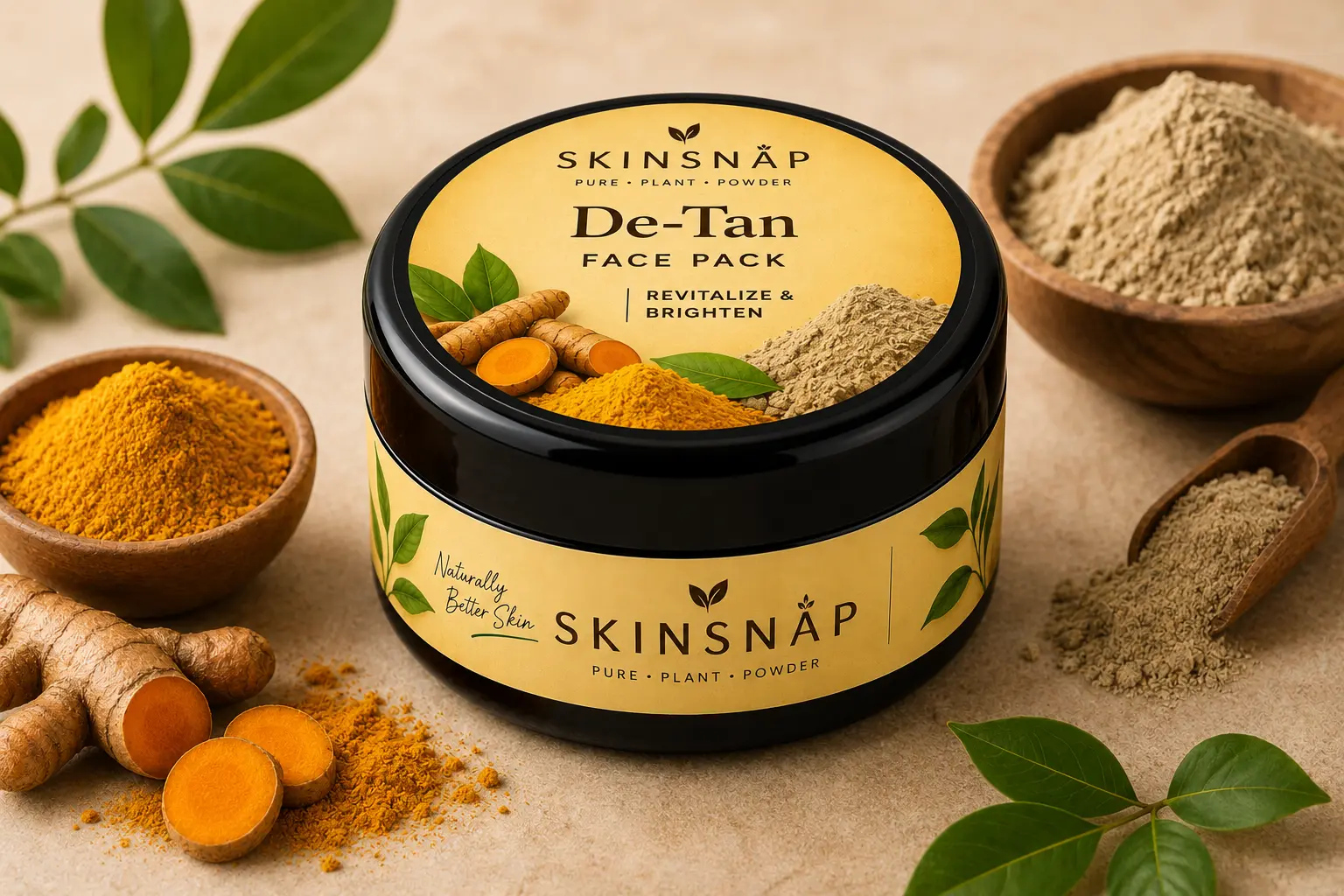
This is exactly the gap SkinSnap's De-Tan pack is built around, pairing turmeric with mineral clay in a pre-measured, dual-chamber pouch. One chamber holds 20ml of pure rose water, the other holds 20g of turmeric-and-clay powder, kept completely separate until the moment you use it. Press the pouch, the inner seal bursts, massage for 10 to 15 seconds to mix, tear the corner, and apply — a correctly proportioned, freshly activated pack every time, with no measuring, no bowl, and no guesswork on how much turmeric is too much.
Key Takeaways
- Turmeric's main benefits come from curcumin's anti-inflammatory, mild antibacterial, and antioxidant properties.
- It brightens dull, tanned skin on the surface; it does not lighten your natural skin tone.
- Use a small amount, two to three times a week for oily skin, once a week for dry or sensitive skin.
- Rinse it off when semi-dry, around 10 to 15 minutes in, to avoid unnecessary staining.
- Turmeric pairs well with clay for oil control and with neem for stronger antibacterial action against acne.
- Staining is normal and temporary — milk, curd, or besan paste helps remove it faster.
Conclusion
Turmeric earns its long history in Indian skincare through real, if modest, benefits: calmer redness, a gentle antioxidant boost, and a genuine (temporary) glow. What it cannot do is change your natural skin tone, no matter what the myths say. Used correctly — a small amount, mixed fresh, rinsed on time, two to three times a week — it's a solid addition to an oily or acne-prone skin routine, and a reasonable once-a-week treat for drier skin.
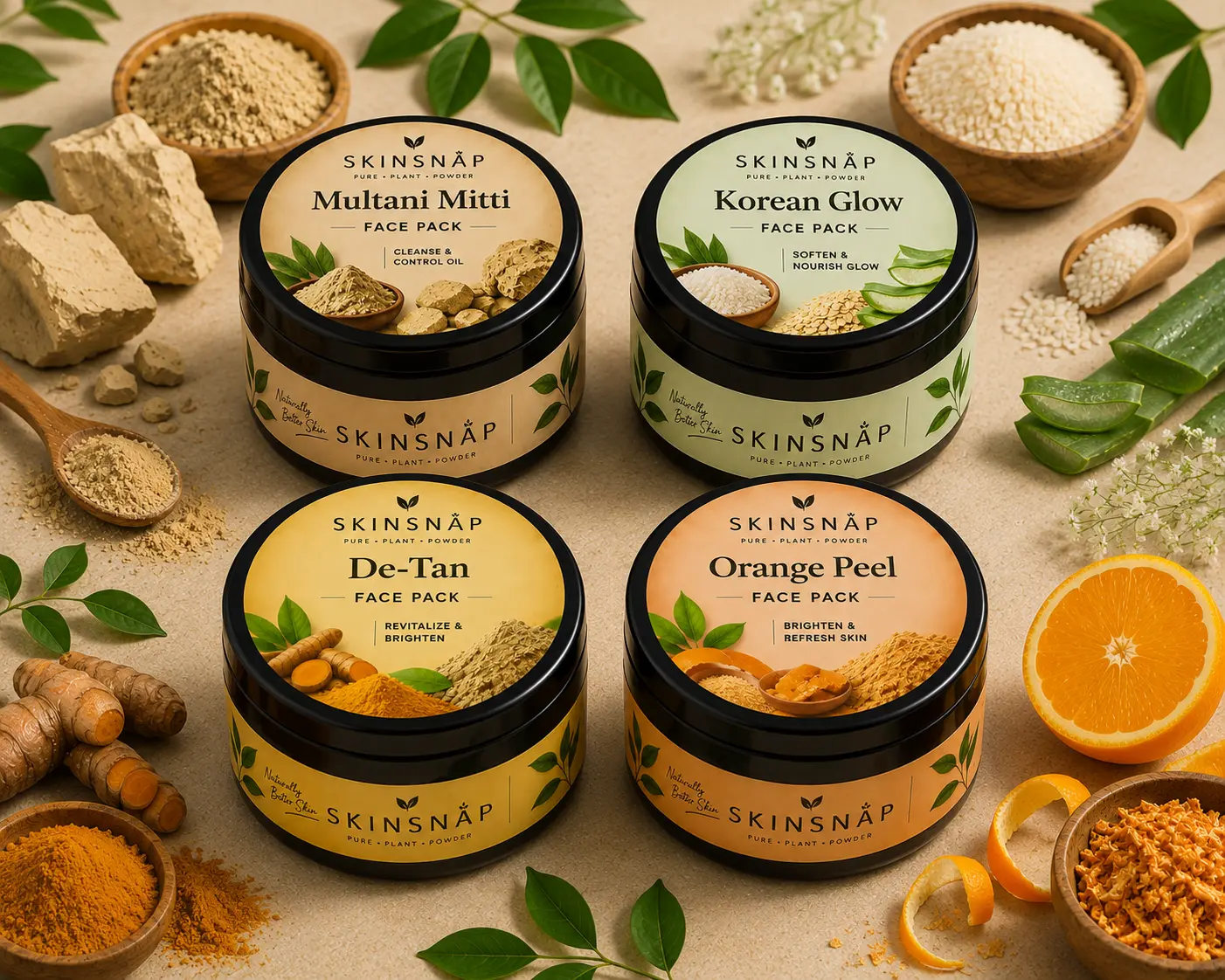
If you want turmeric's benefits without measuring powder or scrubbing stained countertops, try the SkinSnap De-Tan face pack, which pairs turmeric with clay in a ready-to-use pouch, or the 4-in-1 combo pack for tan care, brightening, and oil control together.
Frequently asked questions
No. Turmeric can brighten dull, tanned, or uneven skin by lifting dead surface cells, but it does not change your natural melanin or skin tone. Any glow you see fades if you stop using it, and no ingredient can permanently alter your base skin colour.
It's better not to. Daily use can irritate skin and cause staining that takes longer to fade. Two to three times a week is enough for oily skin, and once a week is plenty for dry or sensitive skin, always followed by a moisturiser.
Curcumin, the pigment that gives turmeric its colour, binds loosely to skin's outer layer, especially if the paste is too strong or left on too long. Using a small amount, mixing it with rose water, and rinsing on time keeps staining minimal.
Gently massage a little raw milk, curd, or besan mixed with water over the stained area, then rinse. Avoid harsh scrubbing or soap right after, since that can irritate skin that's already had an active ingredient sitting on it.
Yes, in a supporting role. Turmeric's anti-inflammatory and mild antibacterial properties can calm redness and swelling around breakouts. It works best combined with oil-absorbing clay, and it won't clear deep or cystic acne on its own.
It's uncommon but possible, since any natural ingredient can irritate sensitive skin. Signs include redness, itching, or a burning feeling. Always patch test a small amount on your inner arm 24 hours before applying turmeric to your full face.
Rose water is the most balanced choice, since it activates turmeric's benefits without adding harshness. Avoid lemon juice, which is acidic and can increase sun sensitivity right after you've used a brightening ingredient like turmeric.
Yes, which is why haldi ceremonies exist, but timing matters. Start a light turmeric routine two to three weeks ahead, never the night before, since fresh staining or an unexpected reaction close to the event is a real risk.
It can help gradually. Turmeric's mild exfoliating and anti-inflammatory action supports skin renewal, which slowly fades shallow marks over several weeks. It works slower than dedicated brightening ingredients like orange peel and needs consistent, patient use.
Yes, oily skin generally tolerates turmeric well when paired with an oil-absorbing base like clay. Two to three times a week keeps oil and dullness in check without over-stripping skin, as long as you moisturise afterward.
They work differently. Neem is stronger against acne-causing bacteria, while turmeric focuses more on calming inflammation and adding a brightening effect. Many routines use both together, since their actions complement rather than compete with each other.
Around 10 to 15 minutes, until the paste is semi-dry, not fully cracked. Leaving it on longer does not boost results, it only raises the chance of noticeable staining and dryness, especially on lighter or more reactive skin.
Try it the fresh way
This article is for general skincare information, not medical advice. Always patch-test a new product on your inner arm and wait 24 hours before applying it to your face.