Multani mitti, also called Fuller's earth, has been sitting in Indian homes for generations, long before fancy clay masks arrived in stores. Your grandmother probably swore by it, and honestly, she was not wrong.
But there is a right way and a wrong way to use it. Used well, it is one of the most effective natural options for oily and combination skin. Used wrong, it can leave your face dry, tight, and unhappy. This guide covers both sides.
What Are the Benefits of Multani Mitti for Your Face?
Multani mitti is a natural clay rich in minerals like magnesium and silica. Its biggest talent is absorption: it soaks up excess oil, sweat, and grime from the surface of your skin like a sponge.
Oil control that you can actually feel
If your T-zone turns shiny by afternoon, this is where multani mitti shines. It pulls out extra sebum from the skin surface, so your face stays matte for longer. This makes it especially popular in humid Indian summers when oily skin works overtime.
Deep cleansing of pores
As the pack dries, it gently draws out dirt and buildup sitting inside your pores. Skin often feels noticeably cleaner and smoother after a single use. Over a few weeks of regular use, many people notice fewer blackheads and less congestion around the nose.
A mild, natural exfoliating effect
When you rinse the pack off with gentle circular motions, the fine clay particles lift away dead skin cells. This is much softer than harsh scrubs, which can create tiny scratches on the skin.
Calming for heat and mild irritation
Multani mitti has a naturally cooling feel on the skin. That is why it is a favourite after long days out in the sun, and why it pairs so well with tan care. If sun exposure is your bigger concern, read our guide on how to remove tan at home.
How to Use Multani Mitti on Your Face?
The method matters as much as the ingredient. Here is a simple routine that works.
Step 1: Start with a clean face
Wash your face with a mild cleanser and pat it dry. Applying clay over makeup or sunscreen just traps that layer against your skin.
Step 2: Mix a fresh, smooth paste
Take about two spoons of multani mitti powder and mix it with rose water until you get a paste like thick curd. Not watery, not crumbly. Rose water is the classic partner here because it soothes while the clay cleans — we cover why in our post on rose water for face.
Step 3: Apply a medium layer
Spread an even layer over your face, avoiding the eye area and lips. A paper-thin layer dries too fast; a very thick layer never dries. Aim for something in between.
Step 4: Rinse before it fully cracks
This is the step most people get wrong. Wash the pack off with plain water when it is semi-dry, around 10 to 15 minutes in. If the clay has turned pale and cracked everywhere, you have waited too long.
Step 5: Always moisturise after
Clay removes oil, so give some hydration back. A light moisturiser keeps the balance right and prevents the tight, stretched feeling.
How Often Should You Use a Multani Mitti Pack?
Two to three times a week is plenty for oily skin. Once a week suits normal and combination skin. If your skin is dry or sensitive, use it occasionally on the oily areas only, or skip it in dry winter months. More is not better with clay — we explain the logic in how often should you use a face pack.
Mistakes to Avoid with Multani Mitti
A few plain warnings, because this ingredient gets over-hyped online.
First, do not expect it to erase dark spots or scars. It cleans and controls oil; it does not change your skin's pigment. Second, avoid mixing it with lemon juice directly on the face — lemon is acidic and can sting or irritate skin, especially before sun exposure. Third, do not store leftover wet paste for the next day. Once mixed with liquid, it starts losing freshness and can pick up germs.
Also remember that results are gradual. You will feel cleaner skin from day one, but visible improvement in texture and breakouts takes a few weeks of consistent use.
Why Freshly Mixed Multani Mitti Beats Pre-Mixed Tubes
Here is something most people never think about: multani mitti works best the moment it meets liquid. Pre-mixed clay creams sitting in tubes for months need preservatives and chemicals just to stay usable. And mixing it yourself at home means bowls, spoons, spilled powder, and guessing the ratio every single time.
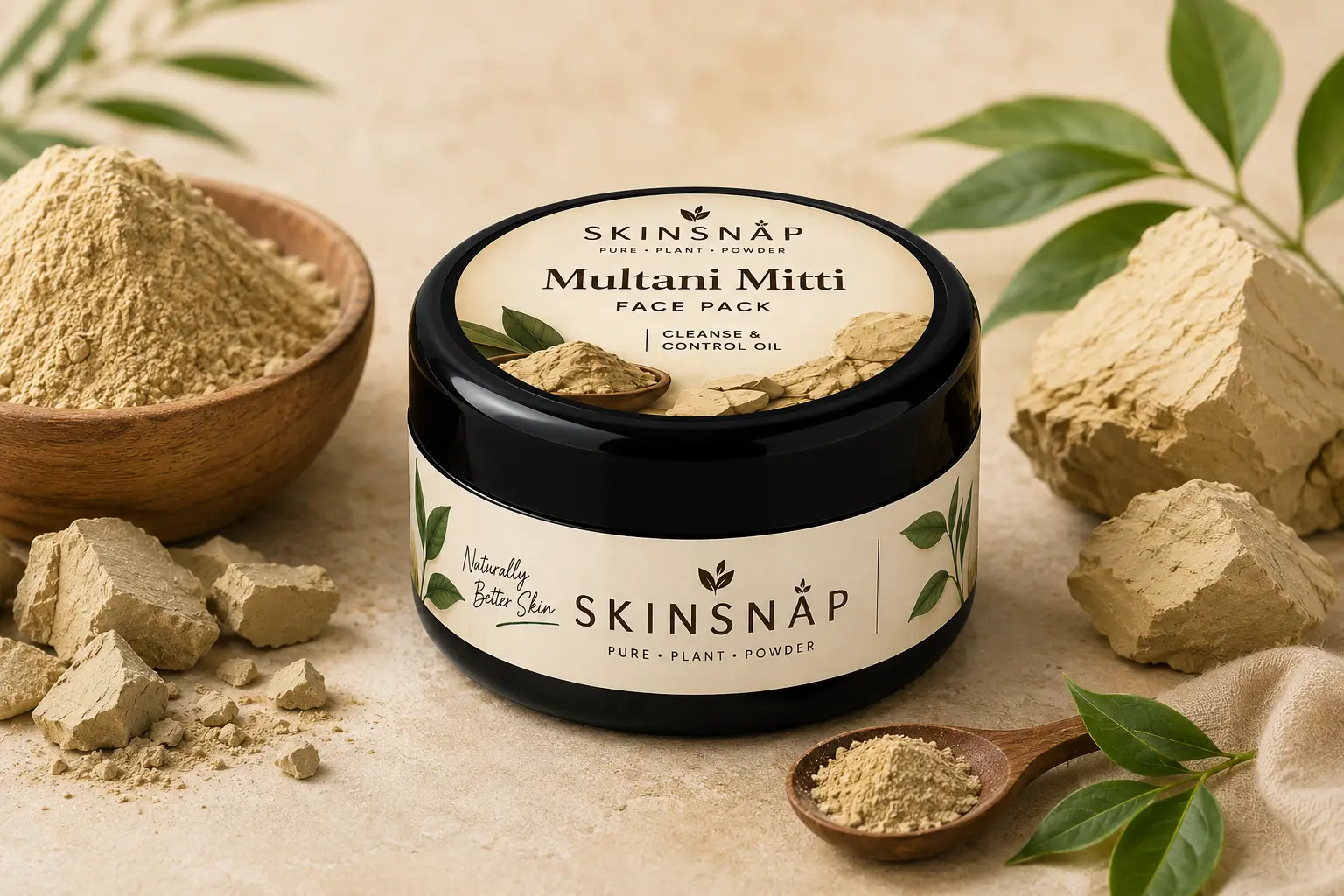
That is exactly the problem SkinSnap's 50g jar solves. It is pure multani mitti powder, 100% natural with zero preservatives, kept dry until you are ready. Scoop a teaspoon or two into a bowl, add a little water or rose water, mix for 10 to 15 seconds into a smooth paste, and apply. Just a freshly mixed pack every time, made in the exact amount you want, with one jar lasting many packs.
A single jar is ₹399 — and the more packs you buy, the less each one costs — while the 4-in-1 combo is ₹749, so spread across the many packs one jar makes, each use costs about as much as a cup of chai. If you want the grandmother-approved ingredient without the grandmother-era mess, try the SkinSnap Multani Mitti pack and see the difference fresh makes.
Frequently asked questions
No, daily use can dry out your skin because clay absorbs oil each time. Two to three times a week is enough for oily skin, and once a week for normal skin. Very dry skin types should use it rarely and always moisturise after.
Rose water is the most balanced liquid to mix with multani mitti. It calms the skin while the clay cleans it. You can also add a few drops of honey if your skin feels dry after clay packs.
Multani mitti can help reduce the oil and clogged pores that lead to pimples, so many people see fewer breakouts with regular use. It is not a medical treatment though, and stubborn or painful acne needs a dermatologist.
No, this is a common mistake. Wash it off when it is semi-dry, usually in 10 to 15 minutes. Letting clay crack fully on the skin pulls out too much moisture and can leave your face tight and irritated.
Try it the fresh way
This article is for general skincare information, not medical advice. Always patch-test a new product on your inner arm and wait 24 hours before applying it to your face.